
Houston driveway services
Asphalt driveway repair in Houston
Asphalt driveway repair should address why the pavement is breaking down, not simply make the damaged area black again. An isolated opening, a worn surface and a driveway moving over weak support need different work. We help you separate repairable areas from pavement that no longer provides a sound base.
At Surefoot Houston Driveway Repair, we offer and manage this work for homes and commercial property access. We explain the proposed treatment, identify what it cannot fix and put the agreed limits in a written scope.
Get an Estimate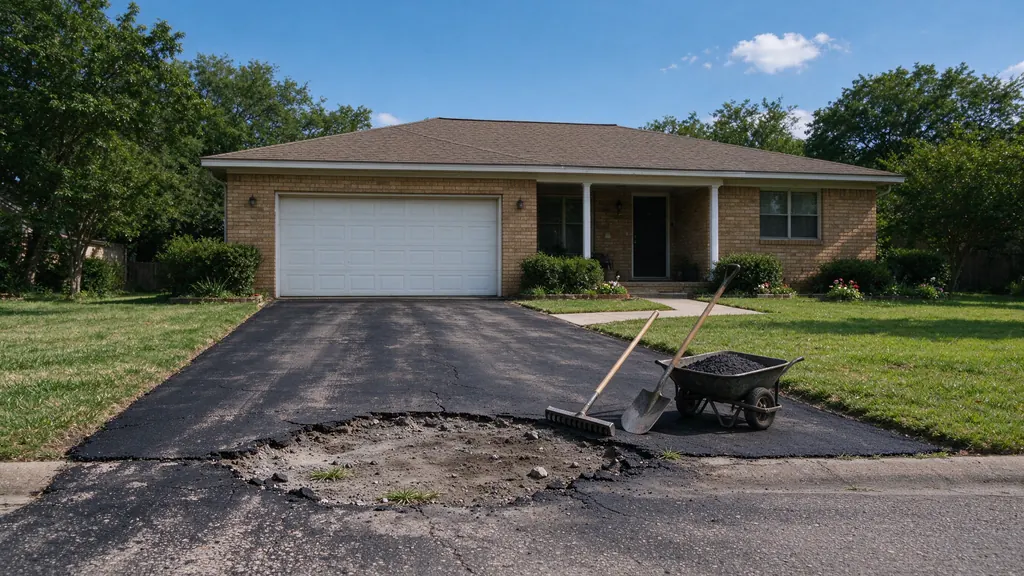
Read the damage before choosing a treatment
Asphalt is a pavement layer made from aggregate held together by asphalt binder. It relies on the prepared material beneath it to distribute vehicle loads. A driveway can look firm at the surface while losing support below, which is why the outline of a hole tells only part of the story. We look at the surrounding pavement, its edges and the route taken by water before defining a repair.
A single crack does not establish a failed base. A network of connected cracks, depressed wheel paths or a patch that moves under normal use gives us different reasons to investigate. Our guide to alligator cracking explains why fatigue patterns should not be treated as a collection of unrelated openings. We also distinguish loose surface aggregate from material breaking away through the pavement depth.
How aging changes the asphalt binder
Asphalt binder changes as it ages and is exposed to oxygen. Oxidation can make it less flexible, leaving the pavement more brittle and less able to accommodate movement without cracking. Fading alone does not measure the depth or severity of that change. We assess the actual pavement condition before treating an aged surface as either a maintenance candidate or a replacement project. A coating does not reverse failed support underneath.
Start with the limits of the damaged section
For a pothole or a localized failed area, the repair boundary should extend to pavement that can support the new work. Leaving fractured material at the perimeter creates a weak connection. We describe what will be removed and whether the assessment suggests that the underlying material needs excavation or recompaction. The asphalt patching scope is different from spreading a thin covering over a depression.
If the pavement remains stable and the concern is an individual opening, asphalt crack sealing may be appropriate. The opening needs suitable preparation and a material compatible with its movement and condition. Sealing cannot restore lost support, raise a settled entrance or make extensively cracked pavement structurally sound. Those limitations belong in the estimate before a treatment is selected.
Look beyond the surface at water and support
Water can enter through open pavement, travel along an unsupported edge or remain where the driveway no longer drains. The useful question is where that water goes next. A new patch laid into the same low point can leave the original problem intact. Our pooling-water guide separates surface shape from issues that may involve the wider property.
Where the slope or a drain needs correcting, our driveway drainage service covers it; whole-yard drainage systems are a separate trade. If the planned repair depends on changes beyond the driveway, we identify that dependency so the work can be coordinated. For Houston-area properties, regional ground conditions are context rather than a diagnosis. A soft spot may involve material, moisture, compaction or another site-specific cause. Read more about base failure and repair choices before comparing proposals.
When a larger treatment makes more sense
A repair plan can include localized excavation followed by a broader surface treatment, but the retained pavement must be suitable for that sequence. Asphalt resurfacing adds a new pavement layer. It is not the same as sealcoating, which is a surface-maintenance treatment. Neither should be sold as a way to permanently hide continuing movement below.
Where deterioration is widespread or the finished levels cannot accommodate another layer, asphalt replacement may provide a more practical route. Removal allows the support and elevations to be addressed directly. We compare what each option retains, what it removes and the unresolved risks that remain. A smaller initial scope is useful only when it still meets the purpose of the work.
Make the repair decision with the whole driveway in view
Tell us about the surface, the change you noticed and where access needs to remain available.
Request a driveway assessmentWhat we establish during the first assessment
Tell us when the damage appeared, whether it changed after rain and whether a previous patch failed in the same place. We also need to know what vehicles use the entrance and where they turn or stop. A photograph helps locate damage, but it cannot establish pavement thickness, hidden base condition or the full extent of a wet area.
The assessment considers garage thresholds, adjoining concrete, gates and the transition at the street. Work near a public sidewalk or road may involve a different authority from work farther inside the property. We confirm the address and proposed work before assuming a permit path. Our driveway permit guide explains why a Houston mailing address alone does not settle jurisdiction.
Make the written scope useful
The proposal should identify repair boundaries, removal, preparation and the intended pavement treatment. It should also explain how concealed unsuitable material will be handled if exposed during removal. Ask how edge support and transitions will be finished, and whether debris disposal or restoration beside the work is included. These details make two repair prices comparable.
Access is part of the scope. If the driveway is the only vehicle route, discuss parking before equipment arrives and obtain specific return-to-use instructions for the actual repair. Weather, material and loading affect that decision, so we do not promise a universal reopening time. Use our quote comparison guide and return-to-driving guidance to prepare questions.
Cost depends on the repair being purchased
A small surface repair and removal of failed pavement with base reconstruction buy different work. Area matters, but access, excavation depth, disposal and the number of separate repair locations also influence the estimate. A narrow strip beside a garage can require more careful preparation than an open patch of the same size.
We describe the cost drivers before suggesting that a published range applies. The Houston driveway cost guide distinguishes supported ranges from work that needs an individual scope. If you are considering a material change, the asphalt and concrete comparison tool helps frame the tradeoffs without treating either material as a universal winner.
What this work looks like
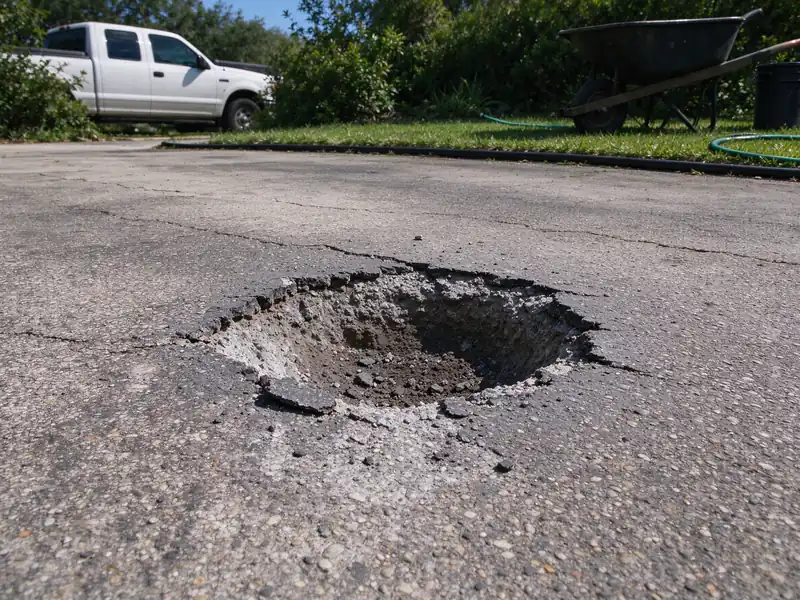
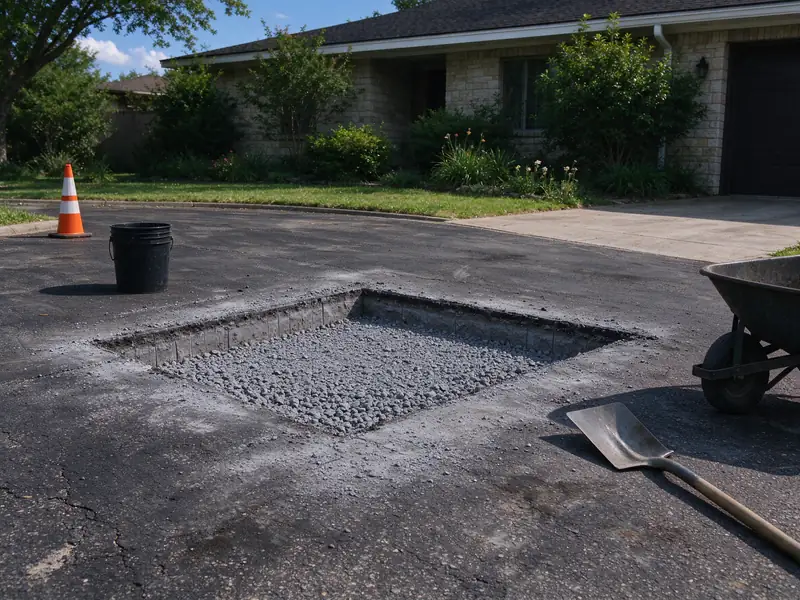
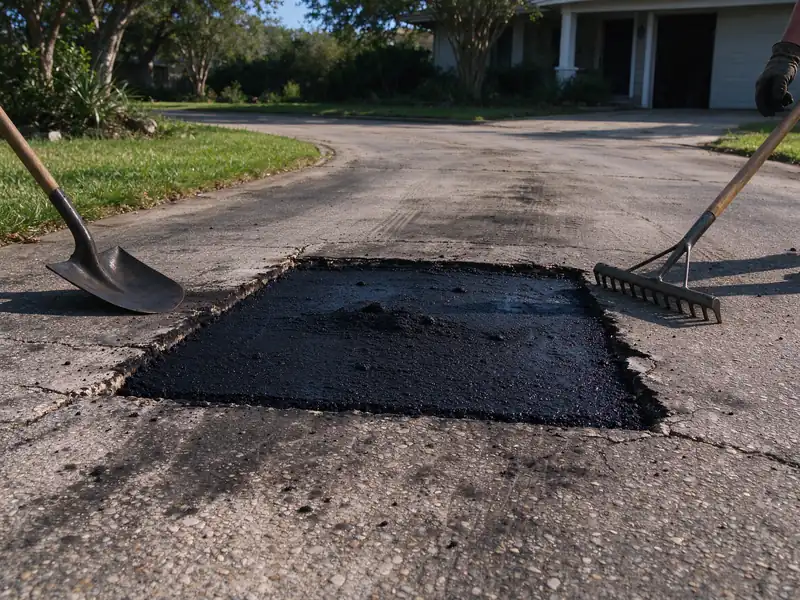
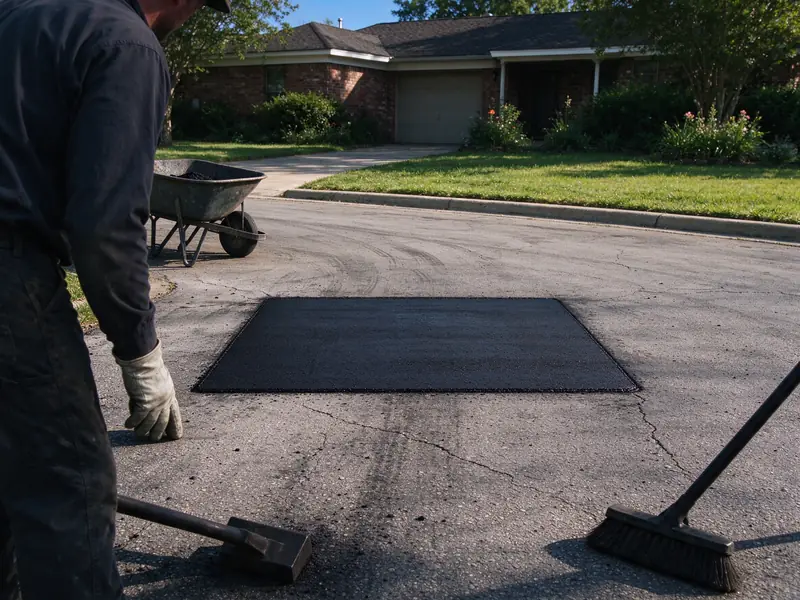
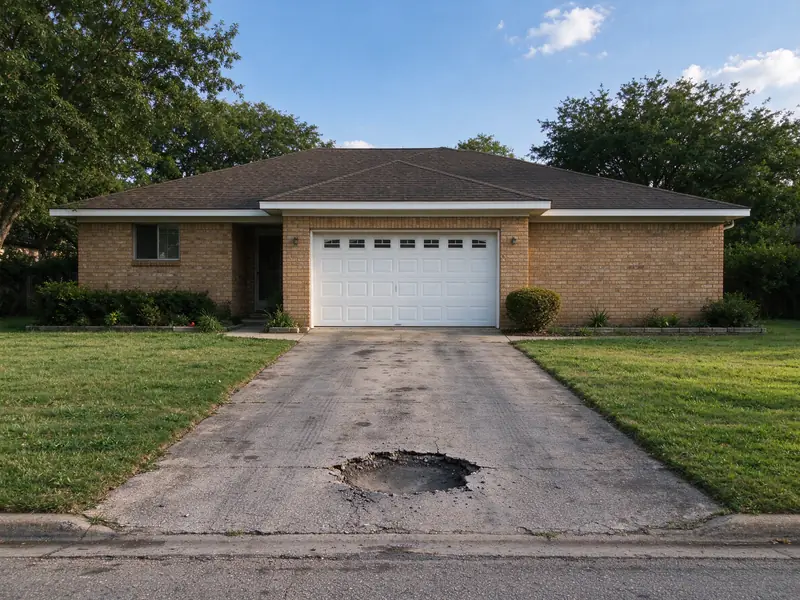
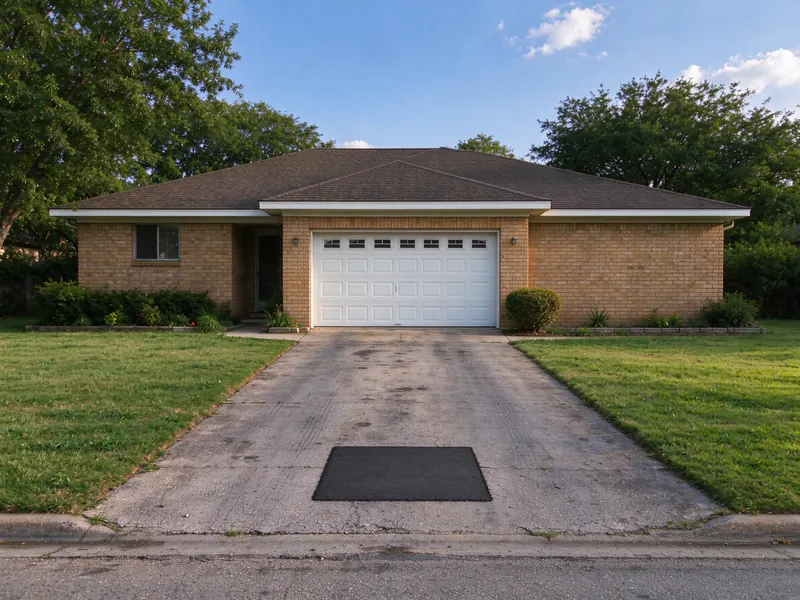
Before and after
Questions about asphalt driveway repair
Can asphalt repair leave a visible outline around the patch?
Yes. A patch can differ in texture and color from the retained pavement, and its boundary may remain visible. We explain the expected finish before work begins. Appearance matters, but a less visible seam is not a reason to leave damaged material in place or avoid necessary base preparation.
Does loose black aggregate always mean the whole driveway has failed?
No. Surface loss and deeper pavement failure are different conditions. The extent, depth and stability of the surrounding material matter. We assess whether the remaining surface can receive a suitable treatment or whether localized removal is needed before recommending a larger project.
Should I photograph asphalt damage while it is wet?
Photographs taken safely after rain can show where water remains, while dry photographs can make cracking easier to see. Both may help explain the problem. Stay out of traffic and do not enter unstable areas just to obtain a photograph; an image does not replace an assessment.
Can a driveway repair include the turning area for a delivery vehicle?
Yes, when that area is part of the approved driveway or property-access scope. Tell us what vehicles use it and how they turn. Concentrated loading and movement affect the repair design. We do not assume a residential passenger-car detail is suitable for every commercial entrance.
Why would an estimate separate pavement repair from surrounding property work?
Because the driveway treatment may depend on work outside its boundaries. A drainage outlet, landscape change or other adjacent condition can affect the result without being included in the paving scope. Separating those responsibilities helps you coordinate the project and avoid assuming that one price covers unrelated work.
Related driveway decisions
Let’s define the work your driveway needs
Send the property location and a description of the problem. Photographs from a safe position help us plan the assessment.
Get an Estimate