
Houston driveway services
Commercial driveway repair in Houston
Commercial driveway repair in Houston needs to account for the vehicles using the entrance and the business that relies on it. We assess concrete, asphalt or aggregate access pavement and plan the repair around the actual failure. This page covers driveways and property access; the parking field is covered by our parking lot repair service.
Get an Estimate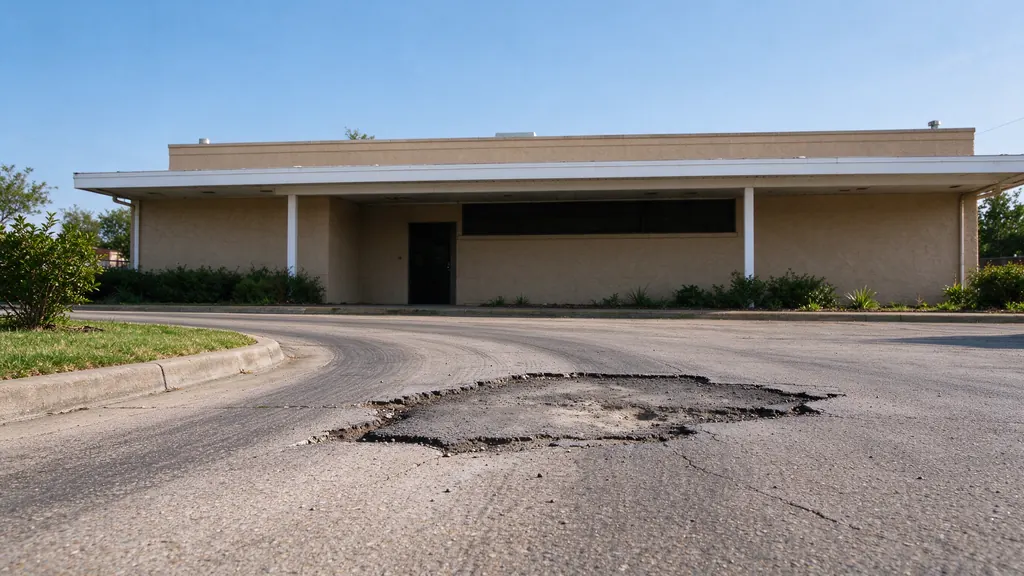
Start with the access that cannot be lost
At Surefoot Houston Driveway Repair, we offer and manage commercial driveway work with attention to loading, entrances and operating constraints. Tell us which vehicles use the route, where deliveries turn and whether another entrance is available. Those details can affect the repair method and sequence as much as the visible damage.
We distinguish a passenger-vehicle entrance from a route carrying heavier or repeated loads. Neither the business name nor the size of the property establishes what the pavement needs. Our commercial access planning guide helps organize the information needed before a repair scope is selected.
A recurring defect needs more than another surface patch
A failed patch at a turning point can reflect problems with the patch, supporting material or loading. Repeated damage does not prove a single cause, but it is a reason to review the complete arrangement. We look at the pavement around the defect and the movement of vehicles through the area.
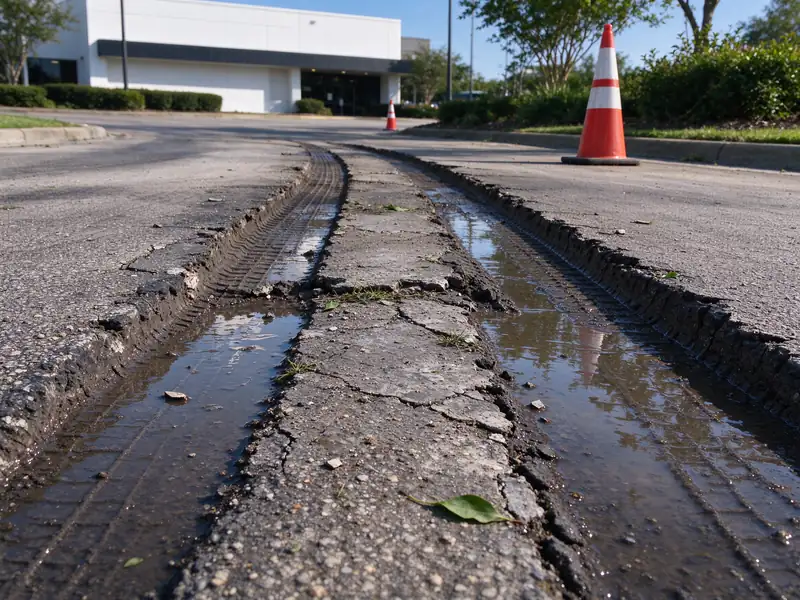
Where support has deteriorated, base failure may change the preparation needed. Water collecting at an entrance can also affect the assessment. Our pooling-water guide explains why the drainage route should be evaluated rather than assuming a new wearing surface will solve it.
Concrete and asphalt need different repair decisions
Concrete work may involve joint repair, eligible leveling or replacement of failed panels. The condition of the slab and its connections influence the recommendation. Selective panel replacement can address a defined failure without implying that the rest of the driveway must be rebuilt.
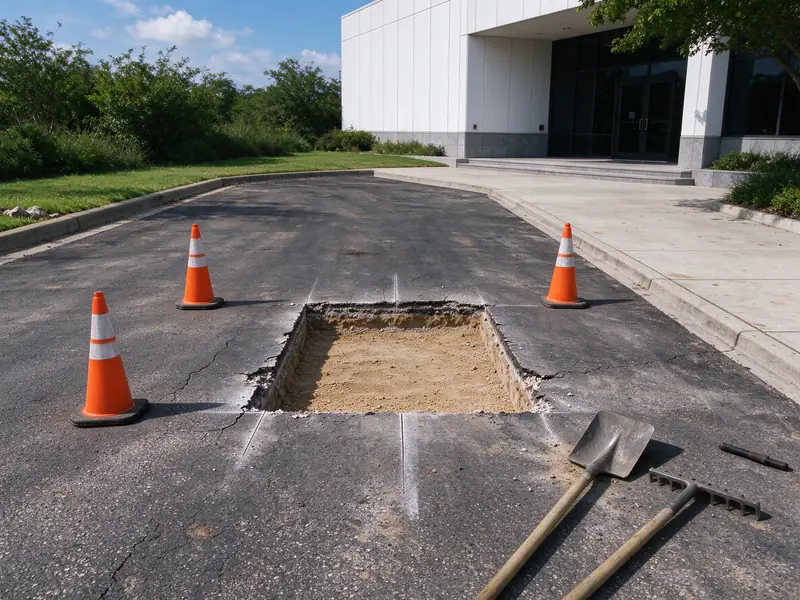
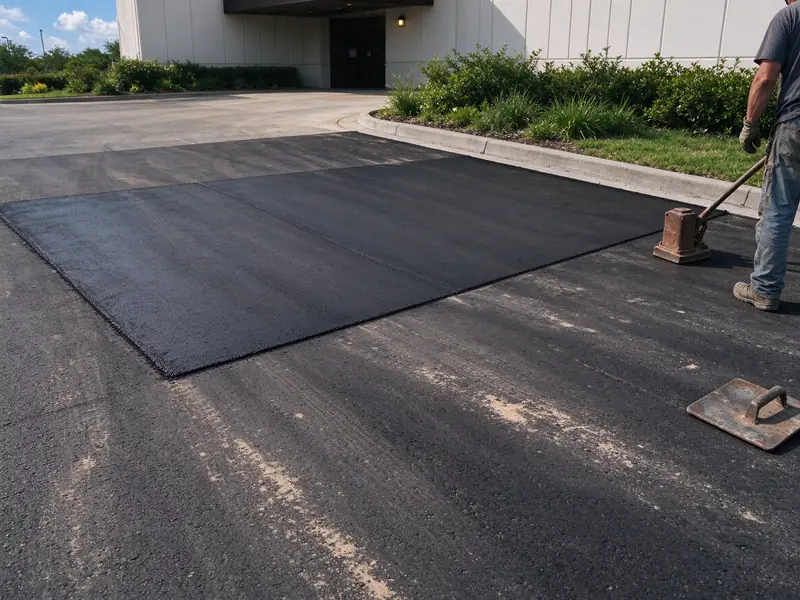
Asphalt repairs can involve localized removal and patching or a broader resurfacing decision where the retained pavement and support remain suitable. Patching and asphalt resurfacing are different scopes. Sealcoating is a surface maintenance treatment and does not restore a failed base or rebuild a heavily deteriorated entrance.
Define vehicle loads without inventing a standard recipe
The intended use needs to be established before choosing the pavement detail. A route used by delivery vehicles can experience different demands from an entrance serving occasional passenger cars. Turning, braking and repeated wheel paths can concentrate those demands in a small area.
We discuss the vehicles and operating pattern, then identify whether further design or evaluation is needed. We do not promise that a generic residential thickness suits every commercial entrance. If the existing access is unpaved, conversion to asphalt or concrete requires its own support and drainage assessment rather than a surface-only comparison.
Let's define the work your driveway needs
Tell us what has changed and which part of the driveway is affected.
Request a driveway assessmentPlan work zones around a usable route
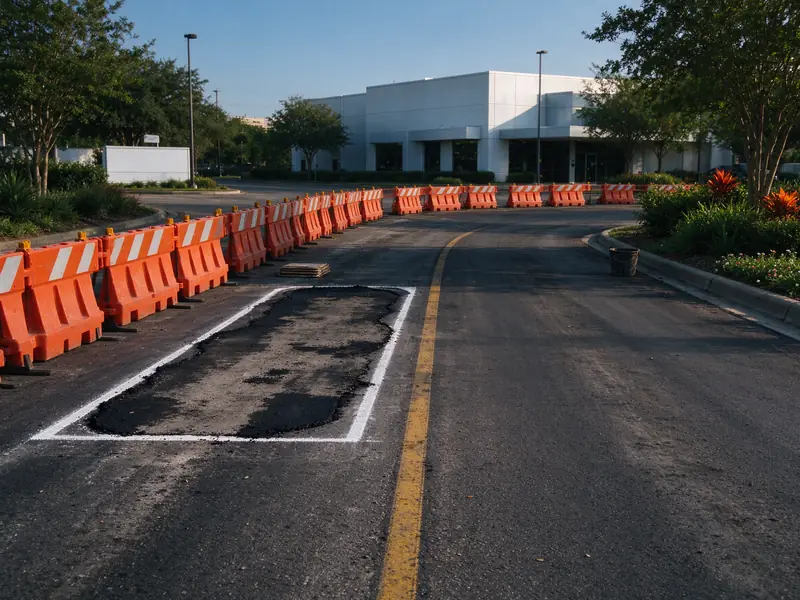
Phasing can help maintain access, but it is not always practical to keep every movement available. Equipment space, demolition edges and protection of new material can constrain the route. The plan should identify which entrance or portion of the driveway is usable at each stage and who coordinates changes with occupants and deliveries.
A narrow remaining lane is not automatically a suitable route for every vehicle. We discuss turning space, pedestrian movement and any essential access requirements before work. If the entrance crosses a public approach, apron work and the applicable authority may introduce additional conditions.
Make operational assumptions visible in the estimate
The estimate should describe the repair area, preparation and pavement work, along with the access plan used to price it. It should identify removal and disposal, temporary protection and restoration where included. Changes to operating hours or the requested sequence can affect the work and should be discussed before scheduling.
We do not invent an overnight schedule, emergency response or guaranteed reopening time. Return to use depends on the selected material, conditions and vehicle loads. The return-to-use guide explains why passenger-car access is not automatically clearance for heavier traffic.
Compare proposals by method and interruption
Two repair prices may describe different boundaries or different assumptions about access. A surface patch can appear cheaper than removal and support correction because it leaves more of the existing pavement in place. The useful question is whether that retained material is suitable for the intended repair.
The quote comparison guide helps separate those scopes. Our Houston cost guide provides context, but residential project bands are not automatic commercial quotes. We define the actual repair, loading and phasing before presenting the project estimate.
Useful information before the assessment
Keep any previous repair scope and a simple description of the vehicles using the entrance. Those records help distinguish a change in operating demands from a recurring failure within an unchanged use pattern.
What this work looks like
Questions about commercial driveway repair
Can repairs be divided around delivery windows?
Sometimes, if the work area and material requirements allow a practical sequence. We need the delivery vehicle types and timing constraints before agreeing to phasing. Dividing the work can affect preparation, access and protection, so it should be part of the original scope rather than an assumed extra.
Do you include the parking lot when repairing the entrance?
This service covers the driveway and property access route described in the proposal. The parking field is a separate scope under our parking lot repair service. We identify the boundary clearly so an entrance repair is not confused with a broader paving program, and the two can be scheduled together.
Can a repaired entrance reopen to trucks when cars can use it?
Not automatically. Heavier or concentrated loads can require different return-to-use instructions. The project plan should identify the intended vehicles and the applicable restrictions. A surface that looks ready or supports light traffic is not by itself proof that it is ready for every load.
What if tenants need pedestrian access through the work area?
We discuss the required walking route before scheduling and identify how it can be kept separate from the repair activity where practical. The scope should address the route and any temporary changes. We do not assume that a vehicle-access plan also resolves pedestrian needs.
Should repeated failure at a gate be patched again?
It depends on what is causing the failure and whether the surrounding pavement remains suitable. Turning loads, drainage and support can all influence that location. We assess those conditions before proposing another patch, especially when the same boundary has broken down after previous repairs.
Related planning guides
Get a scope you can compare
Share the location, surface type and problem you want to address. We will help define the appropriate next step.
Get an Estimate