
Houston driveway services
Asphalt patching in Houston
Asphalt patching replaces a defined damaged area while retaining pavement that can still do its job. The important decision is how far the failure extends. We assess the edges and support beneath the damage so the new patch has a suitable place to connect.
At Surefoot Houston Driveway Repair, we offer and manage this work for homes and commercial property access. We explain the proposed treatment, identify what it cannot fix and put the agreed limits in a written scope.
Get an Estimate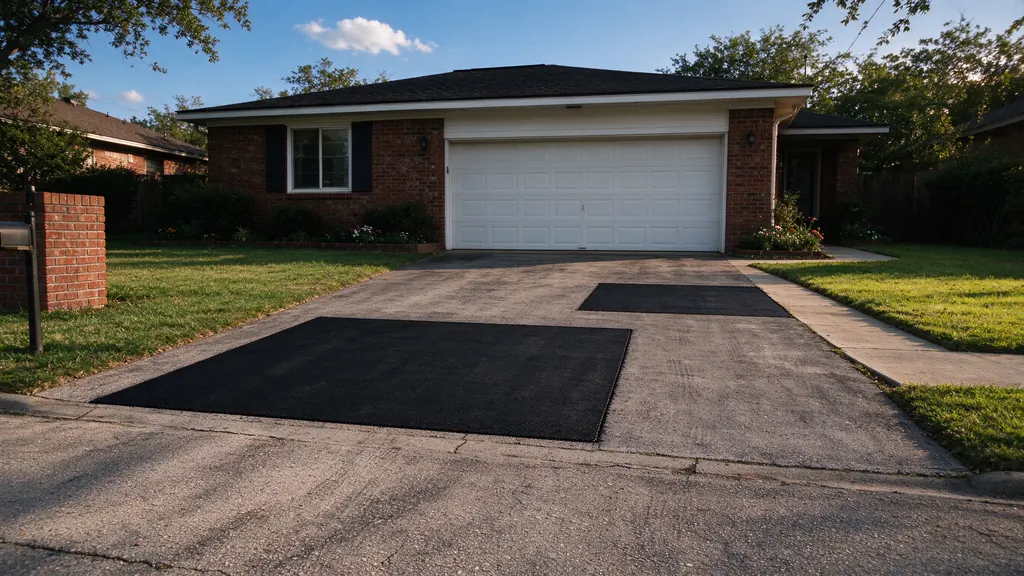
A patch needs sound boundaries
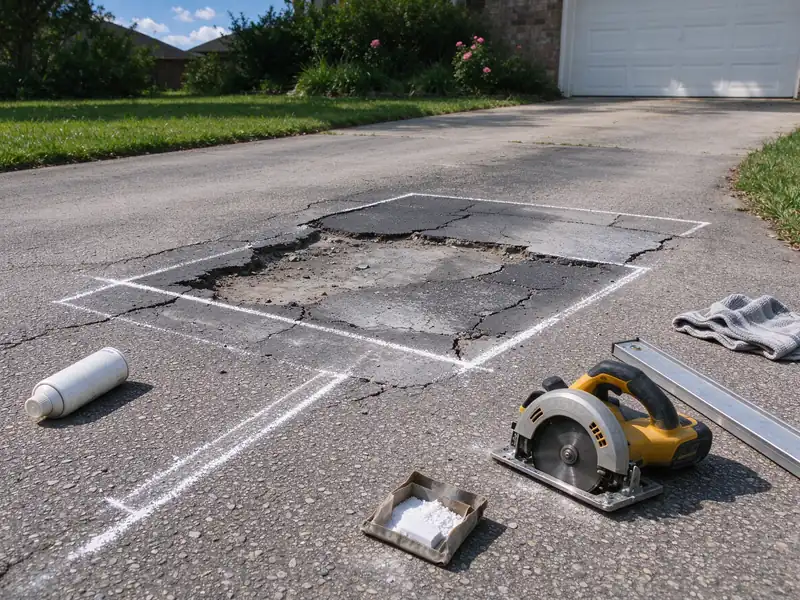
A pothole is the visible opening left after pavement has broken away. Its edges may extend beyond what looks loose from above. Placing new asphalt inside that outline without checking the surrounding material can leave cracks or weak pavement directly beside the repair. We define a practical removal boundary around the failed area, rather than treating the smallest visible hole as the complete scope.
The perimeter also needs a shape that can be prepared and compacted effectively. A narrow feathered layer at the edge is not equivalent to a properly defined repair. Where the damage runs into an unsupported shoulder, the condition of that edge becomes part of the decision. Our driveway-edge guide explains why repairing the surface alone may leave the side vulnerable.
Surface patching and full-depth repair are different jobs
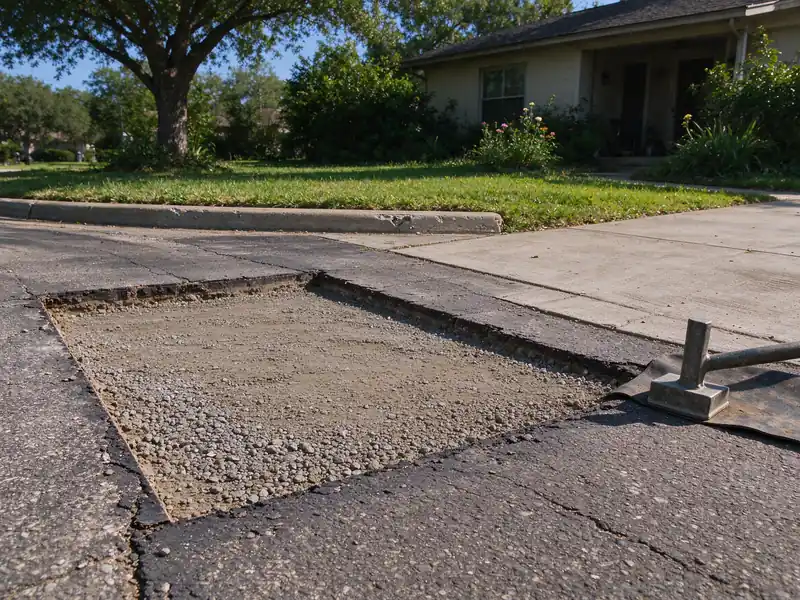
A limited surface correction may be suitable where the underlying pavement and support remain sound. Full-depth patching removes failed pavement so the material below can be inspected and addressed. The depth cannot be selected from the hole’s appearance alone. We explain whether the proposed scope is a surface treatment or removal through the damaged pavement and why that distinction matters.
If the base is wet, loose or otherwise unsuitable, covering it does not make it capable of supporting the new patch. The written scope should say how additional excavation is assessed and authorized if removal reveals more damage. Read our base-failure guide for the relationship between a stable surface and the layers underneath. A patch is a localized construction detail, not simply a quantity of asphalt.
Why the same spot can fail again
Repeated failure can reflect a continuing water problem, insufficient support, weak boundaries or a repair that did not suit the vehicle loads. It does not prove one cause without inspection. Bring the earlier proposal and photographs if you have them. They help distinguish a new failure from a repair whose original limits never included the underlying condition.
We examine the route water takes through and around the patch. A depression that collects runoff may need a change in the repair elevation or a coordinated solution beyond the pavement. Simply making the depression shallower does not necessarily provide an outlet. Our failed-patch article and pooling-water guide explain what to document before the assessment.
Preparation determines what the new material can join
The repair area needs removal of unsuitable pavement and debris, followed by preparation appropriate to the selected repair material. Retained faces should not be loose or contaminated. Where the specification calls for a bonding treatment, it belongs in the construction sequence rather than being assumed from the final appearance.
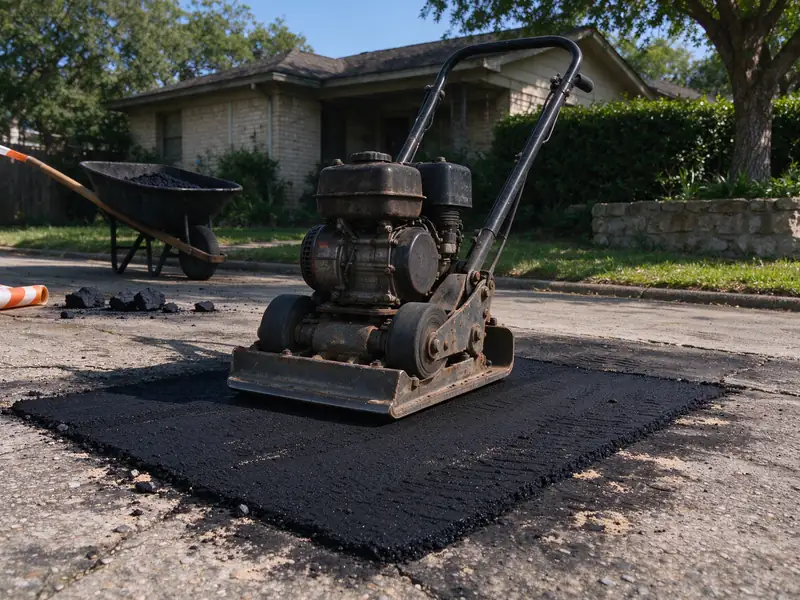
Compaction matters within the patch and at its transitions. Access for suitable equipment, the shape of the opening and the condition at the perimeter all affect execution. We do not promise that a patch will become visually invisible. Its job is to restore the agreed area and connect properly to retained pavement. The broader asphalt repair page explains how patching fits with other treatments.
Make the repair decision with the whole driveway in view
Tell us about the surface, the change you noticed and where access needs to remain available.
Request a driveway assessmentThe repair method must fit the failure
Hot-mix asphalt is placed and compacted while its condition permits the intended construction process. Delivery, access and preparation need coordination so the material is not treated as a loose fill that can be spread whenever convenient. The appropriate mix and placement detail depend on the scope; we do not prescribe one universal specification for every patch.
Infrared repair is another method you may encounter in proposals. It reheats suitable existing asphalt so the surface can be worked with additional material where appropriate. It does not excavate and rebuild a failed base. We offer infrared repair where the existing asphalt and the defect suit it, such as a localized depression or a seam in otherwise sound pavement. Where the base has failed, a full-depth patch is the right repair instead.
Decide whether isolated repairs still fit the driveway
Several separate holes can sometimes be repaired individually. As failures connect or occupy more of the driveway, the amount of retained sound pavement becomes a more useful consideration than the number of holes. A patchwork of short-lived repairs is not automatically economical just because each individual item looks small.
For a suitable retained pavement, localized repairs may precede asphalt resurfacing. If the supporting layers or finished elevations require broader work, replacement may be the appropriate comparison. We discuss these alternatives through the actual condition of the property. Patching versus overlay is a scope decision, not a contest between two universally interchangeable products.
Plan the repair around the entrance
At an apron, patching may meet concrete, a sidewalk, curb or roadside drainage feature. The joint and finished height need to work with that adjoining surface. A patch that creates a lip at a pedestrian crossing or obstructs a water route has not solved the access problem. We review these fixed points before setting the repair limits.
Work at the street can also have permitting or traffic-control implications. The property address and road authority determine the requirements, not the label used on the estimate. See driveway apron repair for the entrance-specific scope. For occupied properties, our access planning guide helps identify vehicles and deliveries that need to be accommodated.
Compare the complete patching scope
Ask an estimator to identify the number and boundaries of repairs, whether pavement removal is included, and what is assumed about the base. Disposal, edge restoration and concealed-condition procedures should be clear. Two proposals can describe the same visible hole while purchasing materially different preparation underneath it.
Our quote comparison guide gives you a way to record those differences. The driveway cost guide explains why an area measurement alone cannot price every repair. Before reopening, follow the project-specific vehicle-use instructions; a patch that feels firm to a shoe may still need protection from concentrated tire movement.
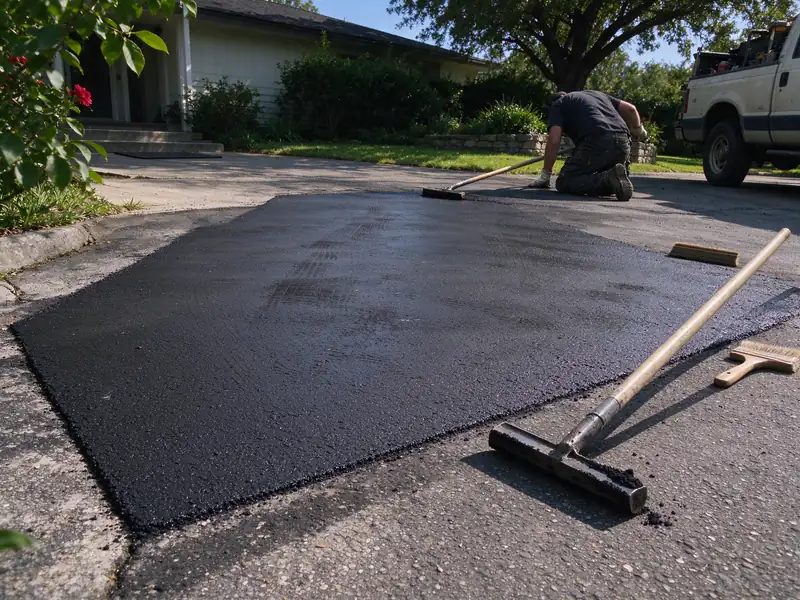
What this work looks like
Questions about asphalt patching
Can a patch be made larger than the pothole I photographed?
Yes. The photographed opening may not include all fractured pavement or weak material beside it. The repair boundary needs to reach suitable retained material and allow effective preparation. We explain the proposed outline so you understand why the construction area may exceed the original hole.
Is bagged repair material the same as a permanent paving scope?
Not necessarily. Materials and methods serve different purposes and have their own preparation and use requirements. A temporary measure to keep an opening manageable should not be confused with a designed repair of failed pavement and support. The written proposal should identify the intended result and limitations.
Can patching correct a deep wheel rut?
It depends on why the rut formed. Adding material can change the surface level without correcting movement or deformation beneath it. We assess the width, surrounding cracking and support conditions before selecting removal, reconstruction or another treatment. A rut is a symptom rather than a complete repair specification.
Why does a patch need attention where it meets the old asphalt?
The perimeter is the connection between new work and retained pavement. Loose edges, inadequate preparation or a difficult transition can weaken that connection. We include the boundary treatment in the scope and explain that the seam may remain visible even when the repair is properly executed.
Should several patches be completed before a future overlay?
Potentially, if the retained driveway is otherwise a suitable overlay candidate. Failed areas should not simply be hidden under a new layer. We can evaluate localized repairs as part of the larger plan, including finished heights and any conditions that would make replacement a better choice.
Related driveway decisions
Let’s define the work your driveway needs
Send the property location and a description of the problem. Photographs from a safe position help us plan the assessment.
Get an Estimate