
Houston driveway services
Asphalt driveway sealcoating in Houston
Asphalt sealcoating is a surface-maintenance treatment for pavement that remains suitable to maintain. It can renew the treated surface, but it does not replace missing pavement, strengthen a failed base or correct settlement. We check those limits before recommending a coating.
At Surefoot Houston Driveway Repair, we offer and manage this work for homes and commercial property access. We explain the proposed treatment, identify what it cannot fix and put the agreed limits in a written scope.
Get an Estimate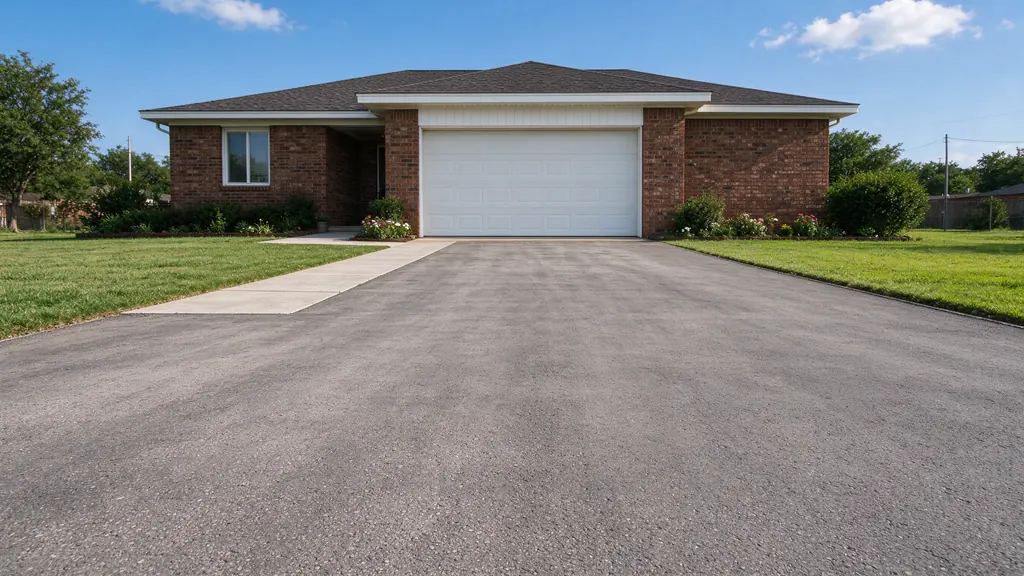
Choose maintenance for a maintainable surface
A driveway can look faded without needing reconstruction, and a dark surface can still hide structural problems. Appearance is therefore only one part of the assessment. We look for loose material, open defects, depressed areas and connected cracking before deciding whether a coating is appropriate. The retained pavement must be capable of performing its role beneath the treatment.
Where deterioration extends beyond the surface, asphalt repair may be needed first. A hole or failed section belongs in a patching scope, not beneath a promise that coating will hold it together. Our fatigue-cracking guide explains why a network of connected breaks changes the decision.
Understand what a coating can and cannot do
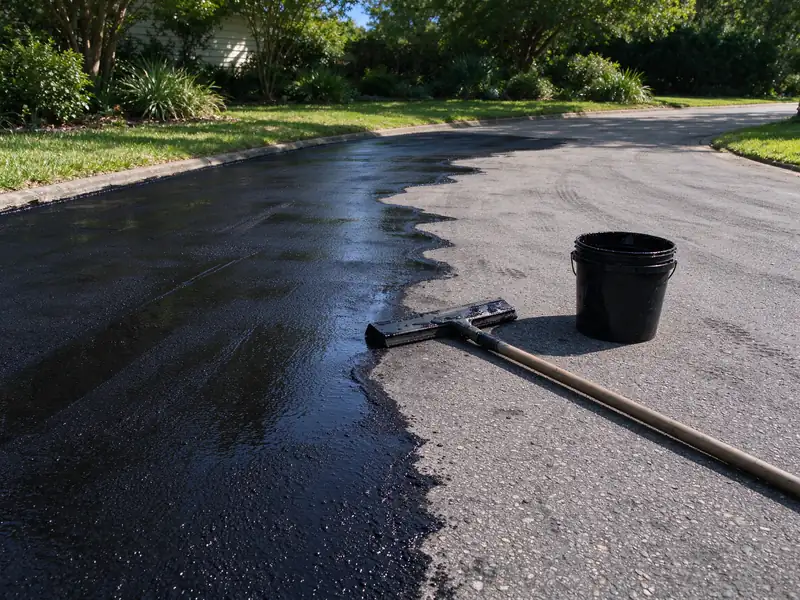
Sealcoating applies a maintenance material to the prepared pavement surface. The chosen system has its own preparation, application and curing requirements. It does not add the same pavement layer as an asphalt overlay, and it should not be sold as a replacement for structural repair. We identify the actual product and intended function in the proposal.
If the driveway needs a new pavement layer, compare resurfacing instead. If the support or finished levels require rebuilding, consider replacement. The sealcoating versus resurfacing guide separates these choices. Similar color after work is not evidence that the treatments provide the same result.
Prepare the surface rather than coat over contamination
Loose debris and unsuitable surface material need attention before application. Contamination, including affected areas where vehicles have leaked, may require specific treatment or repair. We assess those areas rather than assuming the coating will bond equally everywhere. A surface that looks clean from the street may still have conditions that affect the selected system.
Existing treatments also matter. Their condition and compatibility can affect the preparation and whether another coat is appropriate. The proposal should identify the cleaning and any separately required repair. If an area cannot be prepared suitably within the planned scope, that limitation should be explained before application rather than hidden by a temporary change in appearance.
Treat meaningful cracks separately when appropriate
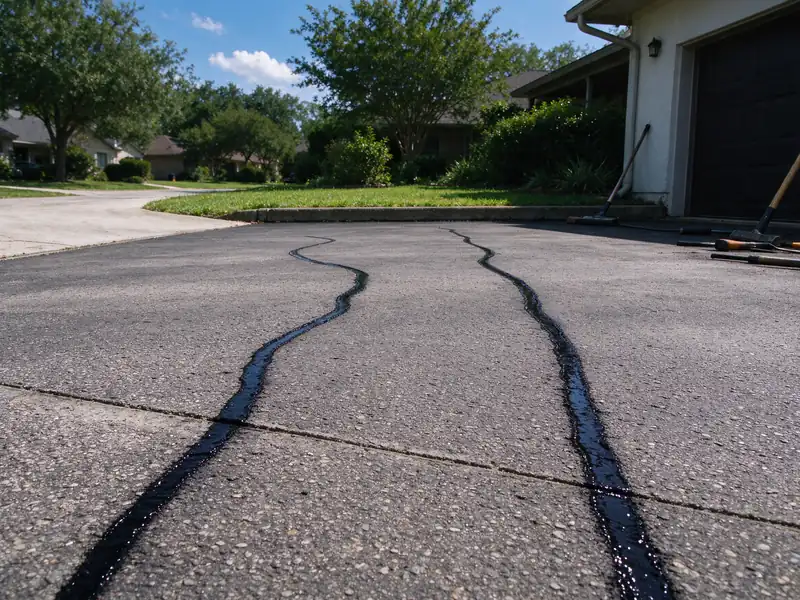
A surface coating should not be expected to perform every crack-repair function. Suitable openings may need separate crack sealing with the preparation and material chosen for the crack. The proposal should identify which openings receive that treatment and which are excluded because the pavement around them is unsuitable.
When an opening accompanies a change in elevation, sealing and coating do not restore the lost level. We investigate that symptom before recommending maintenance. Read sinking and heaving guidance for the distinction. A coating should not become a way to postpone explaining damage that requires a different type of work.
Make the repair decision with the whole driveway in view
Tell us about the surface, the change you noticed and where access needs to remain available.
Request a driveway assessmentKeep the finished surface and drainage in view
Sealcoating does not regrade a driveway. A low area remains a low area, and water can still enter through edges or defects outside the treatment. We look at standing water and nearby conditions so the maintenance scope is not confused with a drainage correction. If water remains after rain, document it safely before the assessment.
Our pooling-water guide explains why the route and outlet matter. Where support below the pavement may be affected, the base-failure guide gives further context. We stay within driveway work and identify any broader property changes that must be coordinated separately.
Plan the application around conditions and use
The product’s requirements determine the acceptable surface and weather conditions. Moisture, expected rain and the condition of the pavement can affect the work window. We do not promise that a fixed calendar date overrides those requirements. The planned sequence should allow suitable preparation and application rather than compressing essential steps to fit an assumed reopening time.
Keep vehicles and other loads off the treated area for the project-specific period communicated by the contractor. Surface appearance alone does not establish readiness. Turning tires, trailers and concentrated contact can place different demands on the treatment. Read weather and driveway work and return-to-use guidance before planning deliveries or parking.
Compare preparation, coverage and exclusions
A useful estimate identifies the treatment area, surface preparation, separately priced crack or pavement repairs and the selected coating system. Ask what happens to unsuitable areas and how adjoining concrete or other surfaces will be protected. The number of coats should follow the chosen specification, not an assumption that more material always produces a better result.
We explain the visible limitations, including repair lines and texture that can remain. Sealcoating is not a promise of a new driveway or an invisible repair history. Use our quote comparison guide to compare like-for-like preparation. The cost guide helps separate maintenance expenditure from reconstruction so the lowest upfront number does not obscure a different purpose.
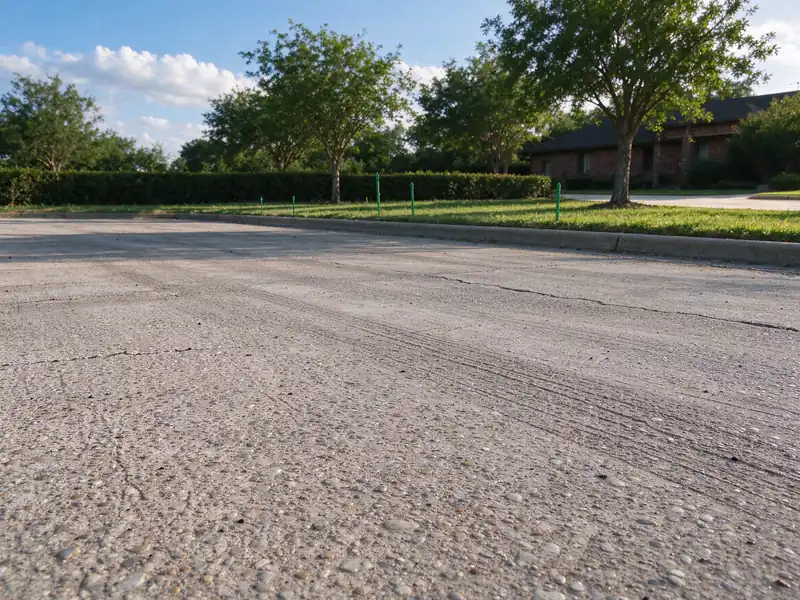
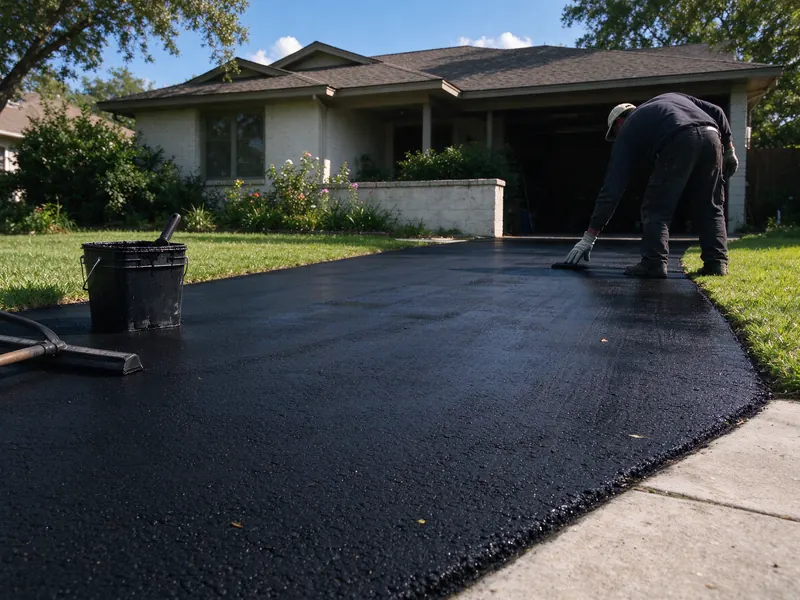
What this work looks like
Questions about asphalt driveway sealcoating
Can sealcoating fill a shallow depression in asphalt?
It should not be treated as a leveling method. A depression needs assessment of its shape, cause and effect on drainage. The selected coating is a surface-maintenance system, not a substitute for the pavement repair or grading detail needed to change the finished level.
Does a darker driveway prove that the coating has cured?
No. Appearance alone is not a reliable return-to-use instruction. Follow the requirements communicated for the actual product and conditions. We explain when vehicles and other loads may return, including any additional care needed around tire turning or concentrated contact.
Should every asphalt driveway receive sealcoating on the same schedule?
No universal interval fits every pavement, product and use pattern. The existing treatment, surface condition and manufacturer requirements need consideration. We assess whether maintenance is appropriate rather than recommending another application solely because a fixed amount of time has passed.
Can a coating make an old patch match the surrounding pavement exactly?
It may reduce some color contrast, but texture and repair boundaries can remain visible. We do not promise an exact match. Preparation and the condition of the patch also matter, so appearance should be discussed separately from whether the retained repair is sound.
What if the driveway has oil-affected pavement in a parking spot?
That area needs specific assessment before coating. Contamination and deterioration can affect preparation and bonding, and a localized repair may be required. The scope should identify the treatment of that spot rather than assuming it will behave like unaffected pavement elsewhere.
Related driveway decisions
Let’s define the work your driveway needs
Send the property location and a description of the problem. Photographs from a safe position help us plan the assessment.
Get an Estimate