
Houston driveway services
Asphalt driveway crack sealing in Houston
Asphalt crack sealing is a maintenance treatment for suitable openings in otherwise serviceable pavement. It helps limit water entry through the treated crack. It does not rebuild a weak base or restore pavement that has broken into moving pieces. We assess the crack pattern before recommending sealing.
At Surefoot Houston Driveway Repair, we offer and manage this work for homes and commercial property access. We explain the proposed treatment, identify what it cannot fix and put the agreed limits in a written scope.
Get an Estimate
Identify the opening you want to treat
A crack through asphalt can develop for different reasons, including movement, aging and stress from the layers beneath it. Its length alone does not tell us whether sealing is appropriate. We look at the surrounding pavement, changes in level and whether the opening is part of a connected pattern. An isolated crack in stable pavement presents a different decision from a cluster of broken sections.
Note whether the crack changes over time, carries water or sits along a previous repair. That history helps define the assessment, but it does not prove the cause. Our guide to changing cracks explains why observation and measurement matter. If the surface has a widespread interconnected pattern, start with fatigue cracking rather than assuming each line should be sealed.
Preparation is part of the treatment
Sealant needs a suitable opening and a prepared surface. Dirt, vegetation, loose material or moisture can interfere with the intended contact. The selected product and repair detail determine how the crack is cleaned and whether additional preparation is appropriate. We describe the preparation rather than judging a proposal only by the amount of visible material placed over the line.
Routing is not an automatic requirement for every crack, and a wider surface band is not proof of better work. The detail should suit the pavement condition and material being used. Where edges are too deteriorated to provide a suitable opening, localized asphalt patching may be more appropriate. We explain when the condition of the crack prevents a maintenance treatment from doing its intended job.
Movement changes the material decision
A working crack can open and close as conditions change. The treatment needs to accommodate the movement anticipated in that opening rather than bond fractured pieces into a supposedly rigid slab. Product selection, installation conditions and the shape of the opening affect performance. We do not prescribe one material for every crack simply because all the surfaces are asphalt.
A crack that is accompanied by settlement or uplift needs the elevation change investigated. Sealant cannot put displaced pavement back at the correct height. If a tire catches an edge or water collects alongside the opening, those symptoms belong in the scope discussion. Read sinking and heaving guidance and the broader asphalt repair overview to compare maintenance with structural work.
Keep crack sealing separate from sealcoating
Crack sealing targets identified openings. Sealcoating is a surface-maintenance application over suitable pavement. A coating should not be expected to fill every meaningful crack or hold a failing driveway together. When both treatments are proposed, the scope should describe which cracks receive separate preparation and how that work fits the coating system.
Resurfacing adds a new asphalt layer and is a different construction decision. Existing movement may still reflect through a new layer if the underlying cause remains. Our sealcoating and resurfacing comparison helps you identify exactly what a proposal is offering. Similar final color does not make these treatments equivalent.
Make the repair decision with the whole driveway in view
Tell us about the surface, the change you noticed and where access needs to remain available.
Request a driveway assessmentAssess water without promising a waterproof driveway
Treating an opening can limit one route for water entry, but a driveway is not made waterproof by sealing visible cracks. Water can approach from edges, adjacent soil or other untreated defects. We look at the surface shape and nearby conditions so the treatment is not presented as a complete solution to a broader moisture problem.
If water stands over the same crack after rain, the low point may need attention independently of the sealing work. We can explain the driveway implications and identify any dependencies beyond our scope. Our pooling-water guide and base-failure guide distinguish the visible opening from what may be happening underneath.
Set a practical maintenance scope
The estimate should identify the cracks to be treated, the preparation method and any areas excluded because they need another repair. Ask whether vegetation removal and disposal of loose material are included. If a previous product remains in the crack, its condition and compatibility can affect the new work. Applying additional material over a failed treatment is not automatically appropriate.
We also discuss how the finished lines may look. A sealed crack can remain visible and may contrast with the surrounding surface. The purpose is the agreed maintenance function, not a promise to erase the repair history. Use the quote comparison checklist to compare preparation and exclusions alongside price, rather than assuming every proposal covers the same cracks.
Choose the work window and protect the treatment
The selected material has installation requirements for surface condition and weather. We plan the work around those requirements and explain the expected interruption to driveway use. A calendar commitment alone cannot override unsuitable conditions. Read our weather and driveway work guide for the difference between scheduling and material suitability.
Before vehicles return, obtain the instructions for the actual product and conditions. Avoid testing the repair with a tire turn or assuming it is ready because the surface no longer looks wet. The return-to-use guide covers the questions to ask. For budgeting, we provide a scope-specific estimate rather than multiplying an unsupported universal rate by the visible crack length.
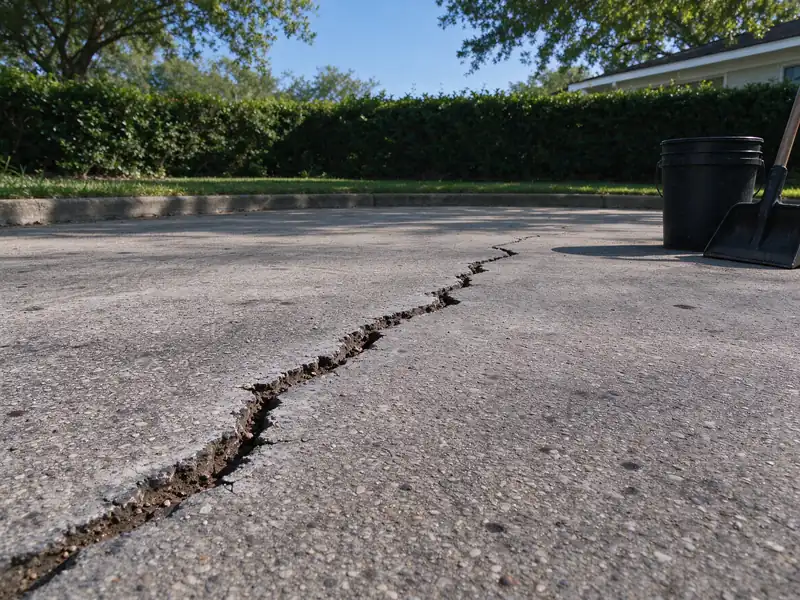
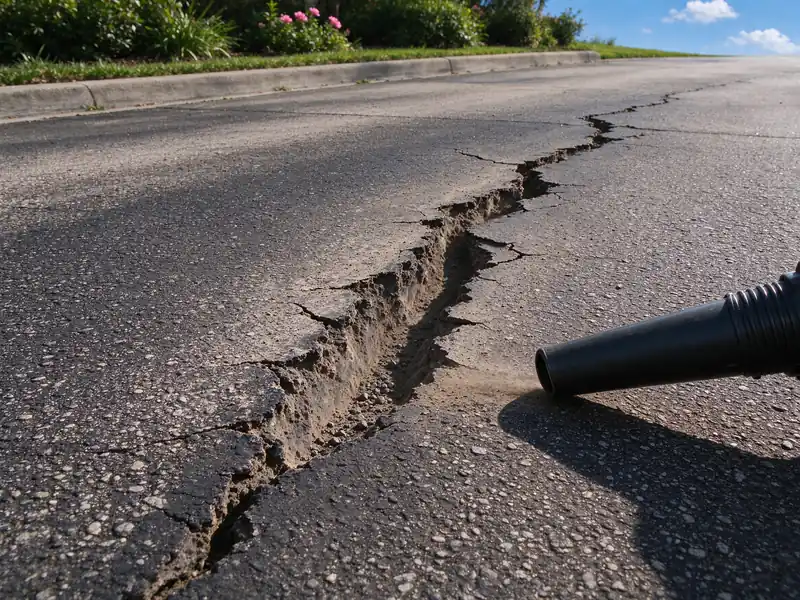
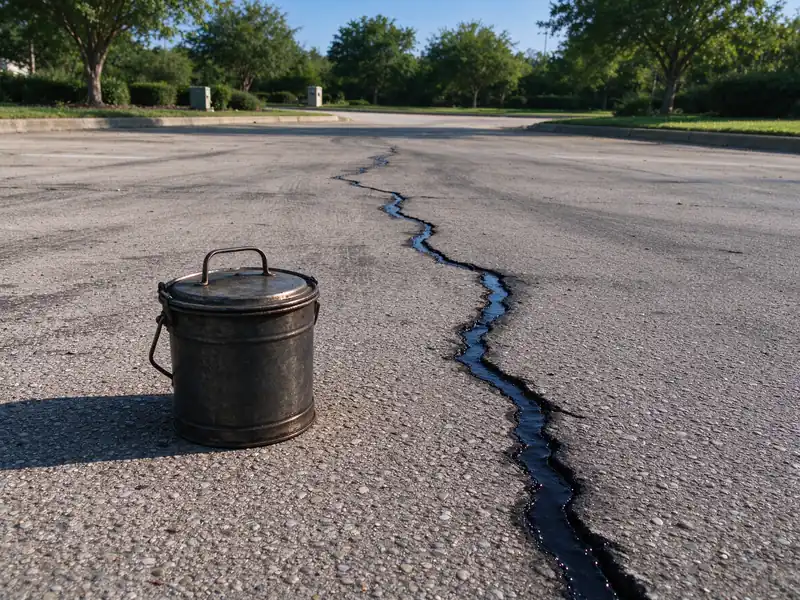
What this work looks like
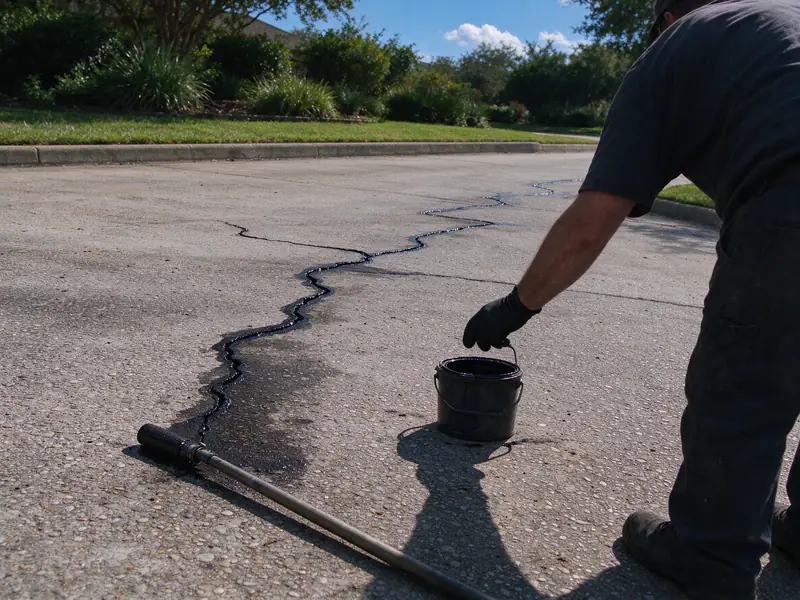
Questions about asphalt driveway crack sealing
Can sealing stop every crack from getting wider?
No. The treatment does not remove the forces that created the crack or rebuild weak support. It is selected for a maintenance purpose in suitable pavement. Continuing movement, deterioration or changes in loading may still require a different repair, even when the original opening was treated properly.
Should weeds be pulled out immediately before a sealing appointment?
Tell us about vegetation in the opening so preparation can be planned. Pulling visible growth does not necessarily remove loose material or establish a clean, suitable crack face. The contractor should determine what preparation the selected treatment requires rather than relying on appearance alone.
Will a sealed line disappear under a later surface coating?
Do not assume it will. The treated line and its texture may remain visible through or beside a later coating, depending on the products and condition. We discuss appearance separately from function so a maintenance proposal does not become an unsupported promise of an unmarked surface.
Is crack sealing appropriate where the driveway has sunk beside the garage?
The settlement needs assessment first. Sealing an opening does not restore the elevation or support at a garage transition. We look at how the pavement meets the threshold and where water travels, then explain whether a separate repair is needed before maintenance is considered.
Can an old sealed crack receive another treatment?
Possibly, but the existing material and surrounding pavement need checking. Loose, incompatible or deteriorated material may affect preparation and adhesion. The scope should explain whether old material is removed or retained and why, rather than simply adding another layer over the same line.
Related driveway decisions
Let’s define the work your driveway needs
Send the property location and a description of the problem. Photographs from a safe position help us plan the assessment.
Get an Estimate