
Houston driveway services
Asphalt driveway resurfacing in Houston
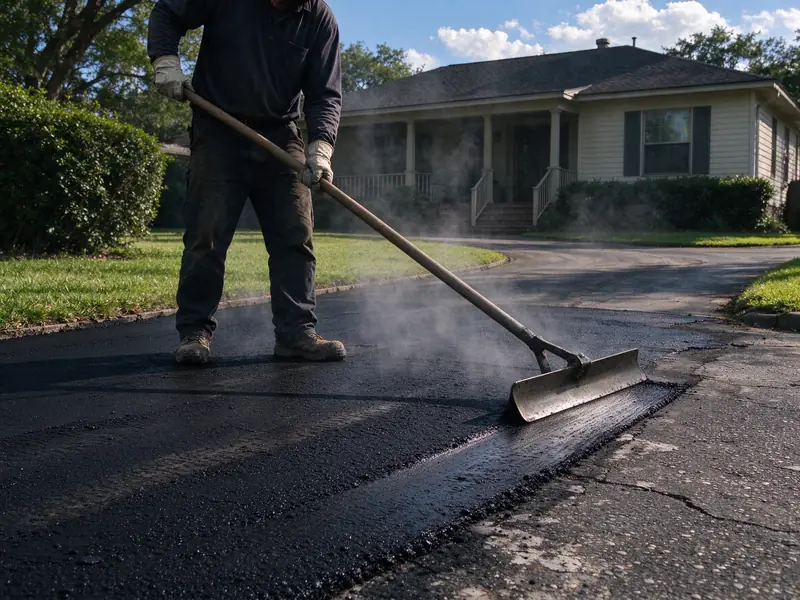
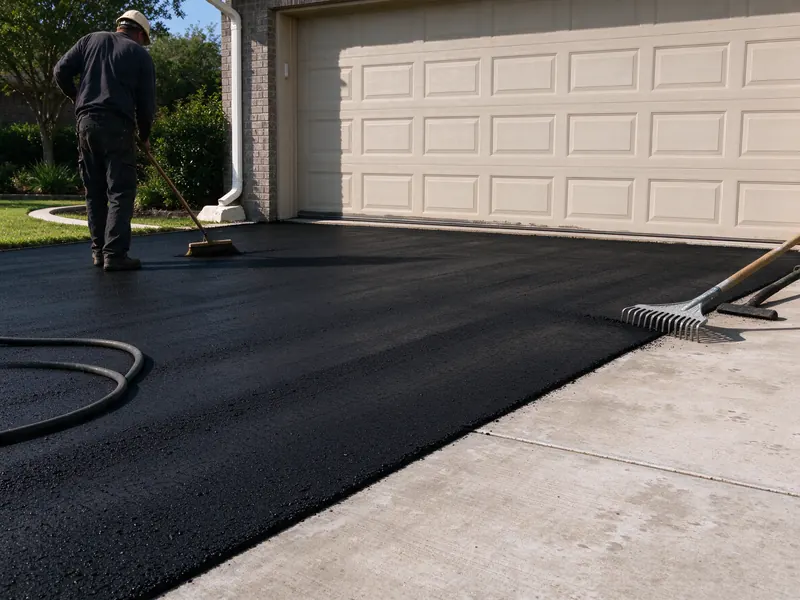
Asphalt resurfacing adds a new pavement layer over a suitably prepared existing driveway. It can renew a serviceable pavement, but it cannot make an unstable foundation sound. We check the retained surface, failed areas and finished heights before recommending an overlay.
At Surefoot Houston Driveway Repair, we offer and manage this work for homes and commercial property access. We explain the proposed treatment, identify what it cannot fix and put the agreed limits in a written scope.
Get an Estimate
An overlay relies on what stays underneath
The existing driveway becomes part of the support for the new layer. If that retained pavement is moving, deeply deteriorated or poorly supported, the overlay inherits those limitations. A smooth new surface can hide a defect temporarily without resolving its cause. We assess the condition across the driveway rather than deciding from the least damaged section.
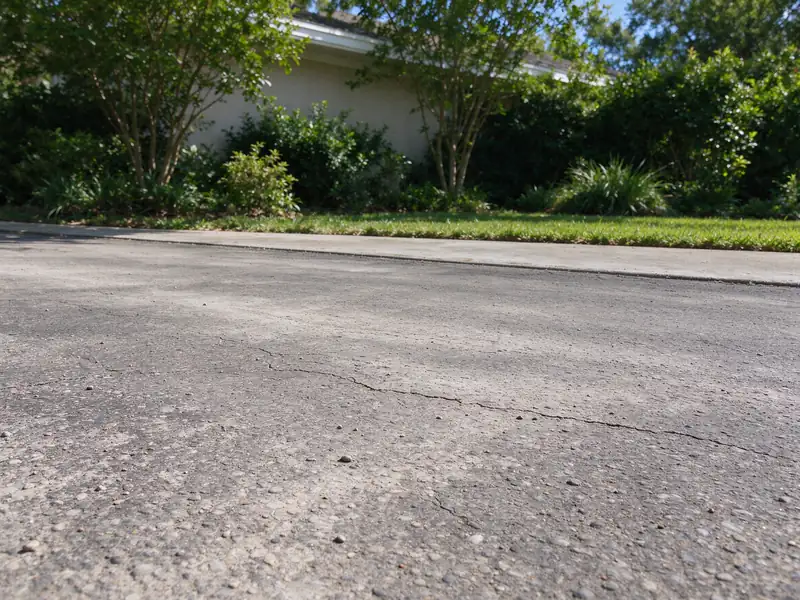
Cracks may reflect through new asphalt when movement continues below. We therefore distinguish stable surface wear from connected fatigue damage, depressions and unsupported edges. The patching versus overlay guide explains how localized repairs can fit a resurfacing plan. Where damage is widespread, asphalt replacement may be the more appropriate comparison.
Check the available height before adding material
An overlay raises the finished surface unless material is removed as part of preparation. That affects the garage threshold, gate clearance, adjoining paths and the street transition. We look at these fixed points early. The correct treatment cannot be selected solely from a desired finished appearance if the new level creates an obstruction or directs runoff toward a building.
At some transitions, milling or other removal may be part of the proposed detail. The objective is a workable connection to the retained surroundings, not an abrupt ridge at the edge of the new layer. See driveway apron repair for the street-side considerations and pooling-water guidance for the importance of the finished surface shape.
Repair failed areas before the broad treatment
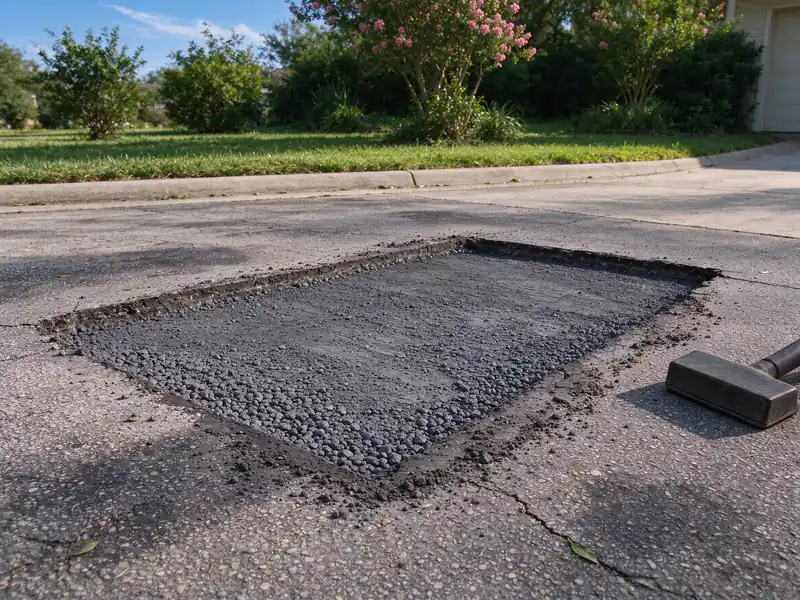
A suitable overlay project may include removal and reconstruction of particular sections. Those repairs should be identified rather than hidden within a vague preparation allowance. We explain where asphalt patching is proposed, what material is expected to remain and how unsuitable base discovered during removal will be handled.
The amount of preparation can materially change the project. Cleaning a stable surface and excavating soft sections are different operations. A proposal that prices only the visible new layer may leave essential work unspecified. Our base-failure guide explains why the material beneath a local defect can determine whether resurfacing remains practical.
Understand the bond and compaction sequence
The new asphalt needs a prepared interface with the existing pavement. Loose material, contamination and incompatible surface treatments can affect that connection. The construction detail should identify the required cleaning and bonding treatment, along with any repairs that must be completed first. A new layer does not excuse poor preparation because it will cover the evidence.
The planned layer and compaction method must suit the pavement, equipment access and intended vehicle use. We do not specify a universal thickness without the site information needed to support it. At a commercial access point, turning and concentrated loads may change the design. Our commercial driveway repair scope covers property access; parking fields are covered by our parking lot repair service.
Make the repair decision with the whole driveway in view
Tell us about the surface, the change you noticed and where access needs to remain available.
Request a driveway assessmentResurfacing is not a sealcoat
An asphalt overlay adds pavement. Sealcoating is a maintenance coating for a suitable surface. The distinction affects preparation, finished levels and what the work can accomplish. A coating cannot provide the same structural role as a designed pavement layer, while an overlay does not automatically correct failure in the layers below.
Ask what the proposal means by words such as restoration or renewal. We identify the actual method so you can compare equivalent scopes. Our sealcoating versus resurfacing guide is a useful starting point. If the existing surface is concrete, asphalt over concrete raises additional joint and movement questions that should not be treated as a routine asphalt overlay.
Plan access and the installation window
Resurfacing can affect a larger portion of the driveway at once than a localized repair. Discuss vehicle storage, deliveries and pedestrian routes before the work is scheduled. If an occupied property has only one entrance, the access plan needs to be explicit. Keeping a route open cannot be promised without checking whether the paving sequence makes that practical.
The installation window depends on the material, weather and prepared surface. We explain the conditions needed for the work and provide project-specific return-to-use instructions. Our weather guide and driving after repair guide explain why a single reopening time should not be applied to every method.
Price the preparation as well as the new layer
Area is useful for an overlay estimate, but it is not the complete scope. Localized excavation, milling, transitions, disposal and access constraints can change the work significantly. We identify those items and describe what is excluded. A lower price is not directly comparable if it leaves failed sections beneath the overlay or omits the street-side transition.
The driveway cost guide distinguishes the available regional pricing context from a property-specific quotation. Use the quote comparison guide to record assumptions about preparation and concealed conditions. We can then compare resurfacing with replacement using the same boundaries and intended use, instead of comparing two labels that cover different projects.
What this work looks like
Questions about asphalt driveway resurfacing
Can resurfacing leave the driveway too high at the garage?
Yes, if the added layer and transition are not planned around the existing threshold. We check the available height before recommending an overlay. The scope may need removal or a different treatment near fixed levels, and in some cases that constraint makes replacement more appropriate.
Will an overlay cover old patch outlines permanently?
It can create a more uniform initial surface, but continuing movement or differences beneath the new layer can still affect the result. We do not promise permanent concealment of old defects. Failed patches need assessment and suitable preparation before the broader treatment is selected.
Can one part be replaced while the rest receives an overlay?
Potentially. A mixed scope can address a failed section while retaining suitable pavement elsewhere. The interfaces and finished levels need to be designed together. We explain each area on the proposal so you can see what is removed, what remains and how the sections connect.
Does a new overlay eliminate the need to assess drainage?
No. The finished surface still needs a practical route for water, and added height can change that route. We assess low points and adjoining fixed surfaces before work. Conditions beyond the driveway may require coordination rather than an assumption that the new layer solves them.
Why might resurfacing be declined on a heavily cracked driveway?
Extensive cracking may indicate that too little stable pavement remains to support the proposed layer. The pattern alone does not establish every hidden condition, but it warrants investigation. Replacement allows failed material and support to be addressed directly when retaining them would leave the main problem unresolved.
Related driveway decisions
Let’s define the work your driveway needs
Send the property location and a description of the problem. Photographs from a safe position help us plan the assessment.
Get an Estimate