
Houston driveway services
Concrete driveway joint repair in Houston
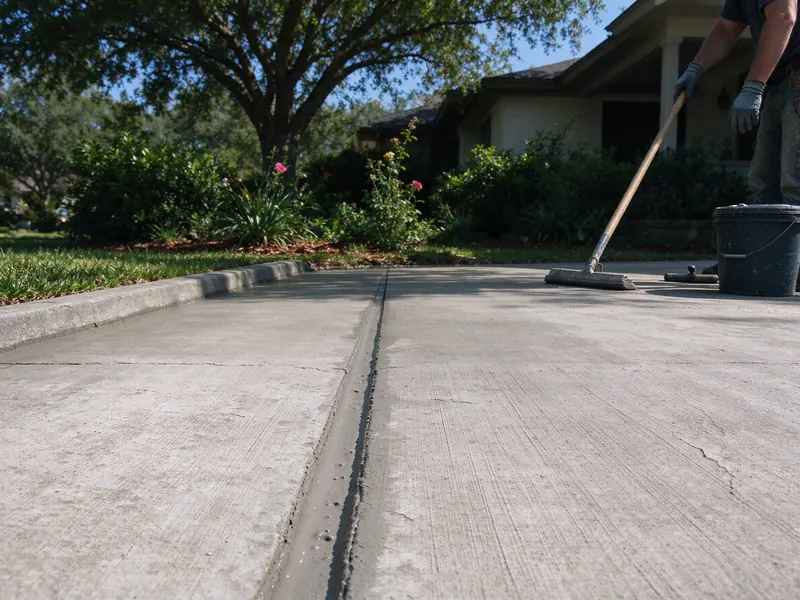
Concrete driveway joint repair in Houston addresses the planned openings between pavement sections and the concrete beside them. We first identify the joint's purpose, then determine whether it needs cleaning and sealing, edge repair or replacement of a damaged section. Filling every opening with the same material can create another problem.
Get an Estimate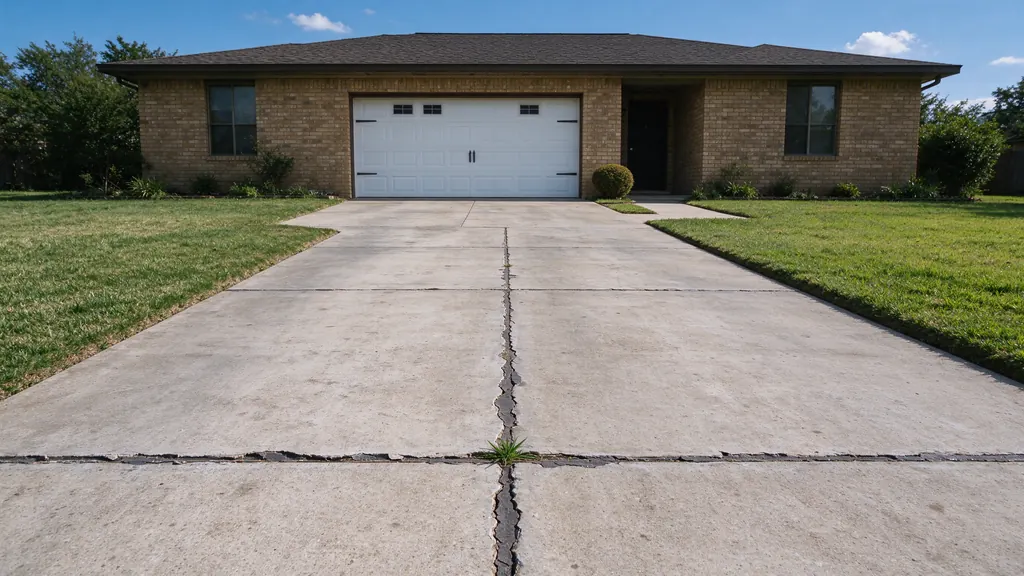
Preserve the job the joint was built to do
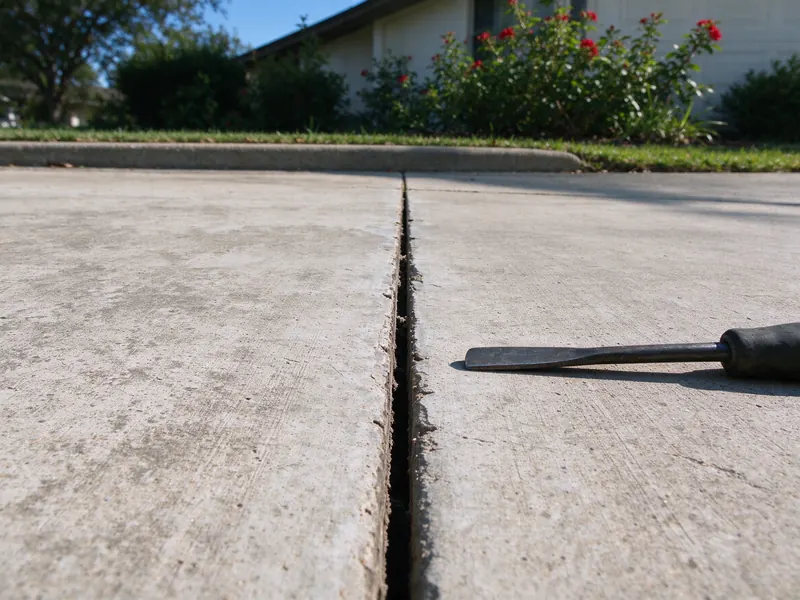
At Surefoot Houston Driveway Repair, we offer and manage joint repairs that account for movement, repair material and the condition of the adjoining concrete. A planned joint is not automatically a defect. Some joints guide cracking to a chosen location, while others separate concrete from a building or another fixed element.
The assessment distinguishes a functioning opening from deteriorated material or broken edges. We look at the layout before choosing a detail. A repair should not lock together sections that need to move separately. If the opening is an unplanned fracture, our concrete crack repair service addresses that different condition.
Why the edges start to break away
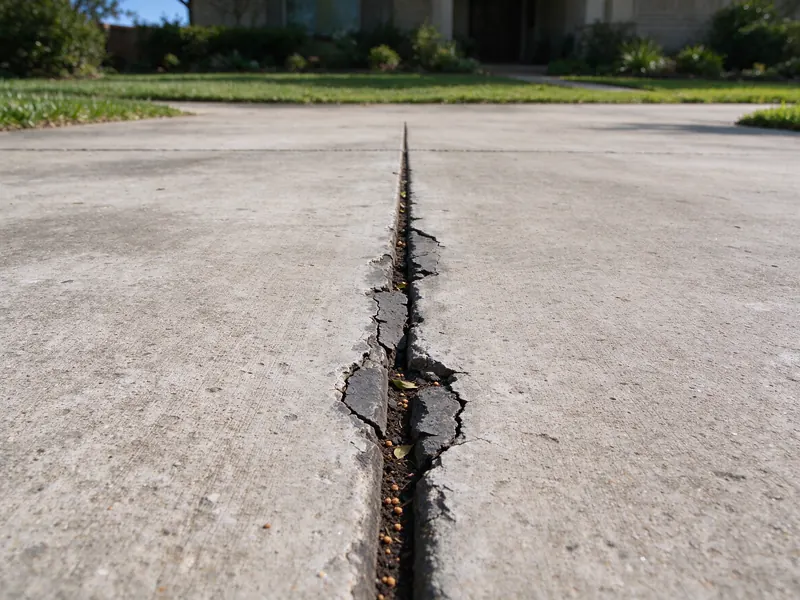
A joint can collect debris or lose its original sealing material. Where movement brings hard debris against the edges, the adjacent concrete may chip. Weak surface concrete or a previous incompatible repair can also deteriorate at an opening. These mechanisms can overlap, so a damaged edge does not prove one specific cause.
We check how far the deterioration extends. A small surface chip is different from a deep broken strip beside a moving panel. If the concrete has become fragmented across a larger area, panel replacement may be more appropriate. Where the surface is peeling more broadly, the assessment also considers concrete spalling.
Cleaning and sealant are only part of the detail
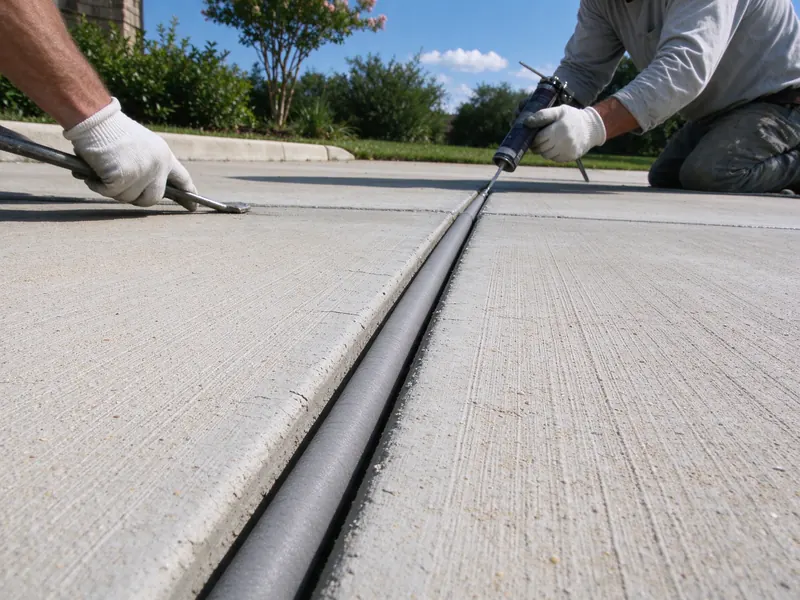
Old material and debris may need removal before a replacement joint treatment is installed. The selected system can require particular opening dimensions, supporting material and clean bonding surfaces. Those details affect whether the material can move as intended. A shallow smear across the surface is not the same as a prepared joint repair.
We describe the preparation and intended joint profile in the proposed work. Not every opening needs the same treatment, and not every joint can be restored without rebuilding its edges. We also consider exposure to wheels and turning movements. The product and detail must suit a driveway, rather than simply resemble the color of the surrounding concrete.
Height differences need their own assessment
Joint repair does not lift a sunken slab. If one side has settled, a fresh joint treatment can leave the trip edge in place. We assess elevation, support and the condition of each panel before deciding whether leveling or removal belongs in the scope.
The garage threshold, sidewalk and street approach can constrain the finished height. A change at one joint may affect water flow or create a new lip at the next one. Our leveling versus panel replacement guide explains how those fixed relationships influence the recommendation.
Let's define the work your driveway needs
Tell us what has changed and which part of the driveway is affected.
Request a driveway assessmentDefine the length and the edge repairs separately
An estimate should identify which joints are included and how damaged concrete beside them will be handled. Treating a long sound opening can be a different task from rebuilding a short area with deep edge loss. The scope should make that distinction clear, including removal of previous material and cleanup.
We also identify any panel movement that the proposed repair does not correct. If a concealed condition changes the work after preparation starts, the next step should be an explanation and an agreed revision. The quote comparison checklist helps separate a basic surface treatment from a fuller edge-and-joint repair.
Plan for access and the finished appearance
The repair area needs protection while materials reach the condition required for use. We explain where you can walk and when vehicles can cross, based on the actual system and site conditions. Avoiding early turning or wheel contact can be part of those instructions. We do not apply a single return-to-driving time to every material.
New joint material and repaired edges may remain visible. A contrasting line can be an ordinary consequence of treating an existing opening, not evidence that the whole driveway needs a coating. Read our repair appearance guide before choosing work primarily to change the look of the driveway.
Keep runoff and later maintenance in view
A joint treatment can help limit material entering an opening, but it does not establish that the base is dry or stable. We look at erosion beside the slab and the route water takes across the driveway. If a downspout or adjoining grade is involved, we explain what the pavement scope addresses and what requires separate attention.
Watch for new height differences or repeated edge damage after the work. Photographs can help document changes without disturbing the repair. Our guides to pooling water and support failure explain why those symptoms deserve a broader review. For project budgeting, start with the Houston cost guide and request a defined joint-repair scope.
What this work looks like
Questions about concrete driveway joint repair
Should a joint against the garage be filled solid with concrete?
Not automatically. An isolation detail may be intended to allow the driveway and building to move independently. We identify the existing arrangement before proposing a repair. Packing the opening with a rigid material without that review can interfere with its intended function.
Can weeds be removed as part of joint preparation?
The proposed preparation can include removing vegetation and debris within the repair opening. That does not mean the joint has been structurally repaired or that nearby roots have been addressed. We distinguish ordinary cleaning from larger root or support conditions when defining the work.
Why is the repair wider than the original joint line?
Loose concrete beside the joint may need removal back to sound material. The repair boundary follows the condition and the selected repair system, not only the narrow line visible from above. We explain the expected width before work and discuss changes if preparation reveals more deterioration.
Is every dark joint line a sign that sealant has failed?
No. Appearance alone does not establish performance. Dirt, moisture and material color can all change how an opening looks. The assessment looks at continuity, adhesion, debris and the adjacent concrete rather than selecting repair solely because the joint is darker than the slab.
Can joint repair be combined with surface resurfacing?
Sometimes, but the joint layout still needs to function through the finished treatment. Covering a moving opening as though it were continuous concrete can lead to a visible failure in the new surface. We coordinate joint details with the resurfacing system instead of treating them as an afterthought.
Related planning guides
Get a scope you can compare
Share the location, surface type and problem you want to address. We will help define the appropriate next step.
Get an Estimate