
Houston commercial paving services
Parking lot repair in Houston
Parking lot repair in Houston starts with mapping where the pavement has failed, why it failed and how the lot has to stay open while the work happens. Potholes, alligator cracking and sunken areas near drains usually trace back to water and the base beneath the surface, so the repair has to address that support rather than only refill the visible hole.
Get an Estimate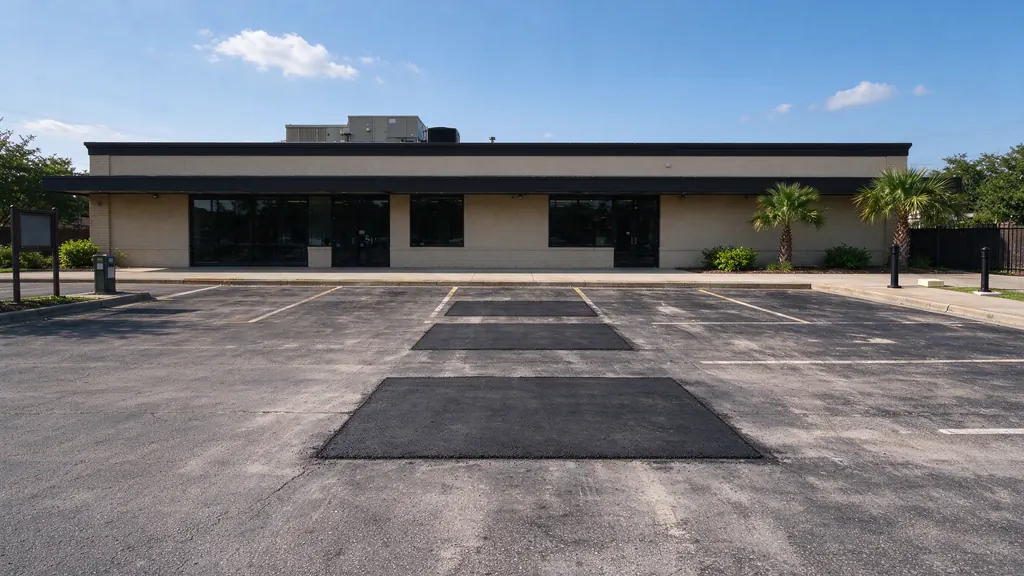
What parking lot repair covers
At Surefoot Houston Driveway Repair, we offer and manage repair of asphalt and concrete parking lots for businesses, offices, churches, apartment communities and other properties with shared parking. The work ranges from crack sealing and full-depth patches to milling and overlaying worn sections, replacing broken concrete panels and resealing a lot before it is restriped. Each method suits a different condition, and a lot often needs more than one.
The entrance and the lot are one system for the vehicles that use them. Our commercial driveway repair service covers the entrance and access drives, and this page covers the parking field and drive aisles behind them. Work that changes an entrance onto a public street is reviewed by the road authority, as our curb cut page explains.
Why Houston lots fail where they do
Harris County Flood Control describes the area's flat terrain and clay soils, and the National Weather Service lists a normal annual rainfall of 51.84 inches at Bush Intercontinental. A large paved area on flat ground has to move a lot of water to its inlets with very little slope. Where the surface sags or a crack lets water through, the base and the clay below it soften, and loaded vehicles push the weakened area down.
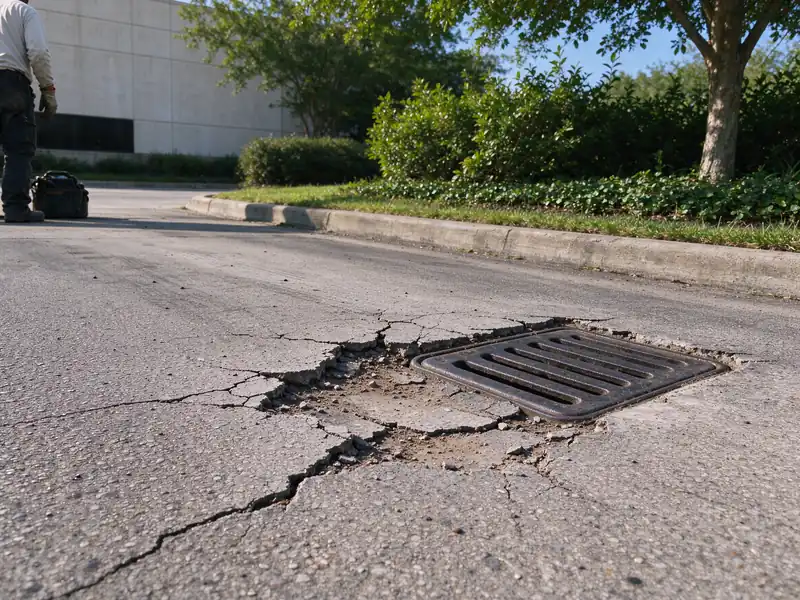
That is why damage concentrates in a few places: the low spots around storm inlets, the drive aisles where delivery trucks and trash trucks turn, dumpster pads, and the edges where pavement meets landscaping. A lot can look sound across most of its area while those zones fail repeatedly. Our guide to alligator cracking explains why that interconnected pattern signals a support problem rather than a surface blemish.
Match the repair to the condition
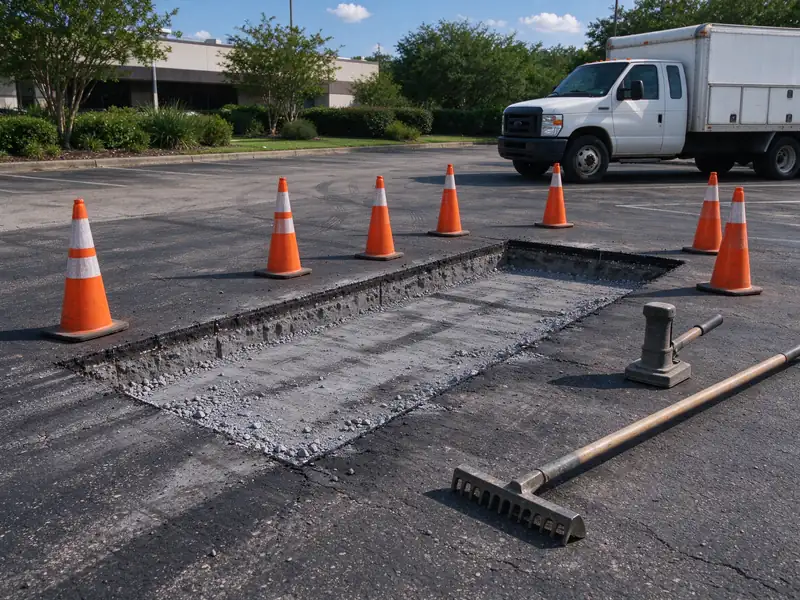
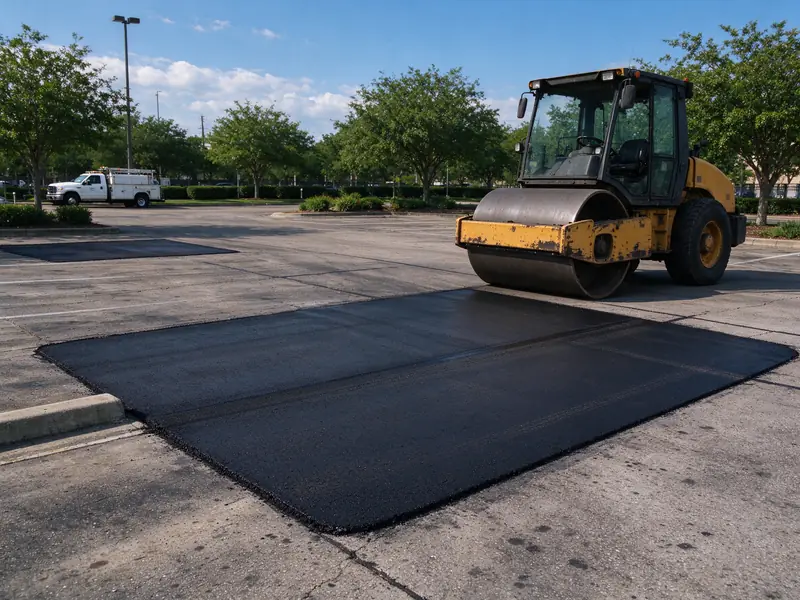
Isolated cracks in otherwise sound asphalt can be cleaned and sealed to slow water entry. Crack sealing does not repair a section that is already broken into small pieces. Fatigued areas need a full-depth patch: saw cutting around the failure, removing the damaged asphalt and any soft base, compacting new base where needed, and placing and compacting new asphalt so the patch sits flush with its neighbors.
When the surface is worn and oxidized across large areas but the base is still sound, milling the top layer and placing an overlay can renew the lot without full reconstruction. An overlay placed over unrepaired failures reflects those failures back through the new surface, so failed areas are patched first. Concrete lots and concrete dumpster pads are repaired by replacing broken panels to full depth, with the joints laid out again rather than patched with asphalt. Our guide comparing patching and overlays walks through that choice.
Water, inlets and the surface profile
A repair that leaves a new low spot will collect water and start the cycle again. Before patching around an inlet or in a ponding area, the finished elevations need to send water to the drain. That can mean rebuilding a patch with a slight crown, adjusting an inlet frame to the new surface, or correcting a broad depression rather than filling only its deepest point.
Underground storm pipes, detention systems and inlet structures that have collapsed or clogged are a separate condition from the pavement. We identify where a pavement problem depends on a drainage structure so it can be scoped, rather than paving over it. Our driveway drainage service covers surface grading and drains at driveways and entrances.
Let's define the work your lot needs
Tell us where the lot has failed, how many spaces are affected and when the property is busiest.
Request a parking lot assessmentKeep the property open while the work happens
Most commercial lots cannot simply close. The repair plan divides the lot into phases so customers, tenants or residents still have parking and a clear route to the doors. Night, early morning or weekend work can suit businesses with daytime traffic, while apartment communities usually need advance notice so cars are moved. Fresh asphalt and new concrete each need time before they carry traffic, and those times set the order of the phases.
Accessible parking spaces and the route from them to the building should stay usable or have a marked temporary alternative. Our commercial access planning guide covers closures, signage and communication with the people who use the site.
Sealcoating and restriping after repairs
Sealcoating an asphalt lot protects a sound surface from oxidation and fuel drips, and it gives a uniform look after patching. It does not hold together a failed section, so patches and crack sealing come first. Applied over failures, a fresh black coat hides the problem for a short while and makes the next inspection harder. The sealcoating service explains what the coating can and cannot do.
Any work that covers or removes pavement markings needs restriping. That is the right moment to check the layout, the accessible spaces and the fire lanes against what the property needs now. Our parking lot striping service covers layout and marking.
What changes the price of parking lot repair
Parking lot repair is priced from the measured areas of each repair type rather than one rate for the whole lot. The depth of base failure, the tonnage of asphalt or volume of concrete, saw cutting and disposal, inlet adjustments and the number of phases all move the cost. Night or weekend work, traffic control within the lot, and restriping after the repair add to it. A lot with many small scattered patches costs more per square foot than one with a few large areas.
A proposal you can compare should show each repair area on a site sketch with its method. Use our quote comparison guide and the Houston cost guide for the questions to ask about scope and quantities.
Useful information before the assessment
A site plan or aerial image, photographs of the failed areas and ponding after rain, the hours the lot is busiest and any history of past patching help us plan the assessment. Mark areas where trucks load or turn. Do not lift inlet grates or enter drainage structures to inspect them.
What this work looks like
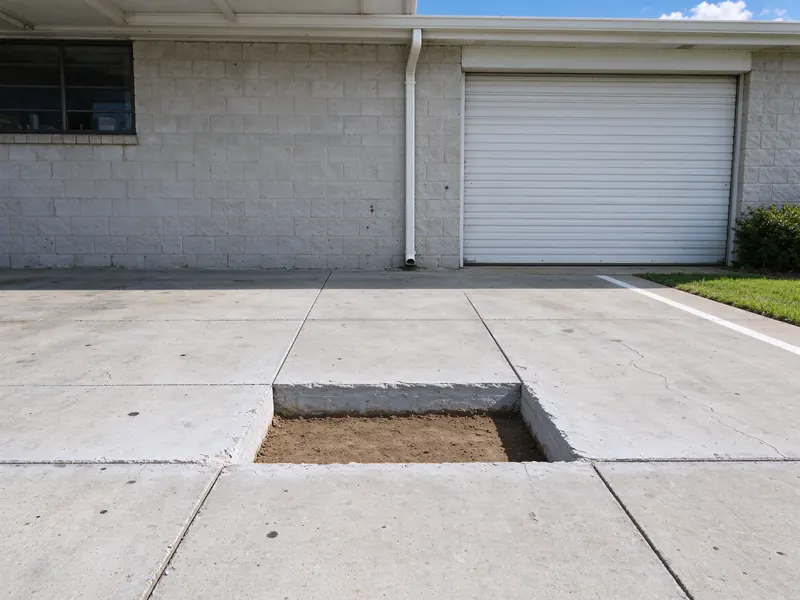
Questions about parking lot repair
Why do potholes keep coming back in the same part of my parking lot?
A pothole that returns usually sits over wet or weakened base. A cold patch or a surface patch fills the hole without removing the soft material beneath it. A full-depth patch removes the failed area and rebuilds the support, and the surrounding surface is graded so water does not collect there again.
Can the parking lot stay open during repairs?
In most cases, yes, in phases. The lot is divided so part of it stays available while other areas are repaired and cured. Night and weekend scheduling can reduce disruption. The plan should show which areas close when and how people reach the entrance and accessible spaces.
Is an overlay or a full replacement better for an old asphalt lot?
It depends on the base. If most of the lot is structurally sound with surface wear, patching failed areas and overlaying can renew it. If failures are widespread and the base is weak across the lot, an overlay will crack again quickly and reconstruction of those areas is the stronger choice.
Should a parking lot be sealcoated right after repairs?
Sealcoating usually follows patching and crack sealing once the new asphalt has had time to cure. It protects the sound surface and evens the appearance. The coating is not structural, so it should never be used in place of repairing failed sections.
Do you repair concrete parking lots as well as asphalt?
Yes. Concrete lots are repaired by removing broken panels to full depth, correcting the base and placing new concrete with the joint pattern restored. Asphalt patches in a concrete lot behave differently from the slab around them and are generally a short-term measure.
Related planning guides
Get a scope you can compare
Share the property address, the problem areas and how the lot is used. We will help define the repair phases and the next step.
Get an Estimate