
Houston driveway services
Driveway curb cuts in Houston
A driveway curb cut in Houston creates a new vehicle entrance through the street curb or widens an existing one, together with the approach that connects it to the property. Because the work sits in the public right-of-way, the road authority's permit, plan review and inspections shape the job before any concrete is placed.
Get an Estimate
What a curb cut includes
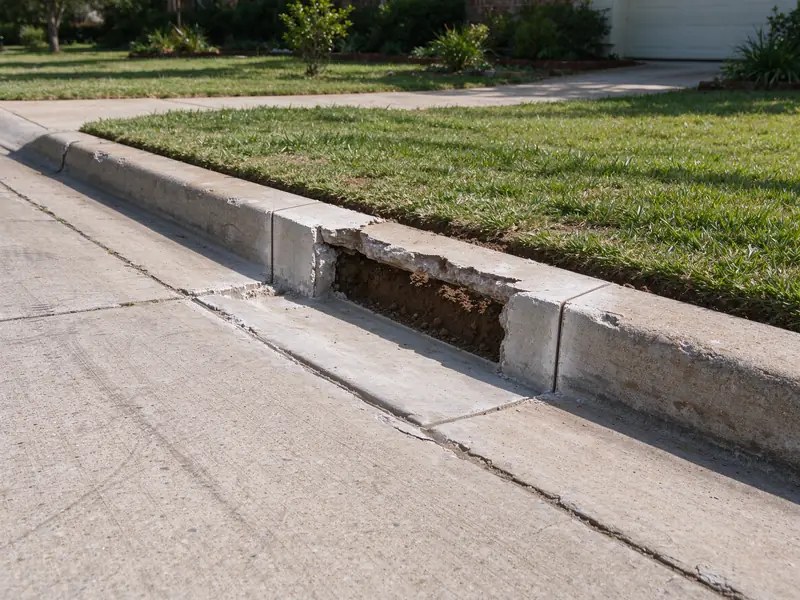
At Surefoot Houston Driveway Repair, we offer and manage new and widened driveway entrances where a property needs a different access point or a wider opening. A curb cut is more than removing a length of curb. The raised curb and gutter are taken out, a lowered curb section or transition is built so vehicles can cross, and a new approach is built between the street and the property line. A public sidewalk crossing the entrance has to continue through it.
This page covers changing an entrance. Repairing a broken approach within its existing footprint is a different job, described on our driveway apron repair page. The difference matters because a new or wider opening changes what the road authority reviews, how water moves along the gutter and how the sidewalk meets the drive.
Who approves the entrance
The road that the driveway connects to decides the process. Inside the City of Houston, the Residential Driveway, Sidewalk, or Curb and Gutter Permit covers new driveways and sidewalks, removing and replacing driveway, sidewalk or curb and gutter, and driveway extensions. Houston Public Works lists it under Chapter 40 of the city code, with plan review and inspections required. Commercial properties use a separate commercial driveway permit.
Outside city limits, unincorporated Harris County handles driveway construction in county right-of-way through its own permitting. Other cities in the area, such as Pasadena, Katy and Missouri City, publish their own driveway forms, and an entrance onto a state highway falls under TxDOT access rules. A Houston mailing address does not settle which office applies. Our Houston-area driveway permit guide walks through identifying the right authority.
Plans, inspections and the order of work
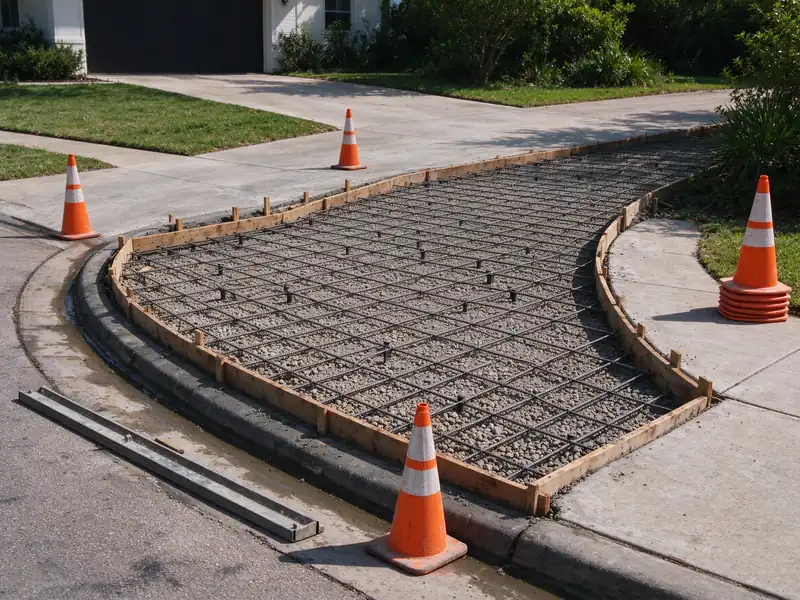
For a City of Houston residential entrance, the permit page asks for an application with dimensioned site plans and a copy of the property survey, and it requires the work to follow the approved, traffic-stamped site plan. Inspections take place before and after concrete placement. That sequence sets the schedule: forms and any culvert go in, the inspection passes, and only then is concrete poured.
Width, location and spacing from intersections or neighboring drives are set by the authority, not by preference. A proposal should treat the opening shown on the approved plan as the boundary of the work. If the plan changes after approval, the permit generally needs a revision before construction continues.
Keep the gutter and drainage working
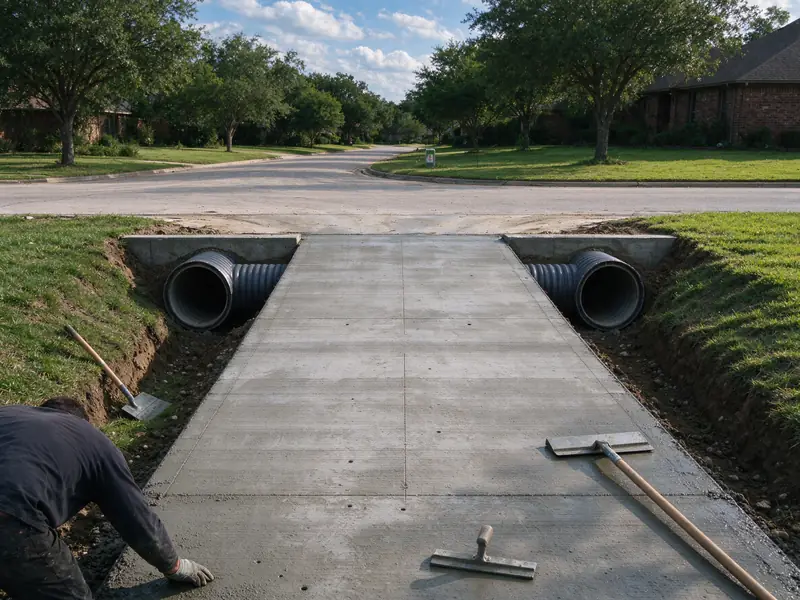
On a curb-and-gutter street, the gutter carries runoff to the storm inlets. A new curb section has to keep that flow line continuous so water does not pond at the entrance or spill onto the drive. On a street with an open roadside ditch, the entrance usually crosses on a culvert instead of a curb. Houston's permit page notes that the culvert must be installed before the inspection, and Harris County ties driveway work in its right-of-way to the ditch and site plan.
Houston is flat, and Harris County Flood Control describes clay soils that drain slowly. An approach set at the wrong elevation can send street water toward a garage or trap water behind the curb. We set the finished profile from the fixed points, the gutter, the sidewalk and the garage slab, before promising a particular slope. The pooling water guide explains why the receiving area matters.
Let's define the entrance your property needs
Tell us whether you want a new opening or a wider one, and what kind of street the property faces.
Request a driveway assessmentCheck what is already in the right-of-way
The strip between the street and the property line often holds more than grass. Water meters, storm inlets, fire hydrants, utility poles, street trees and buried lines can all limit where an entrance goes. Utility locates are requested before excavation. A conflict with a fixed feature may move or narrow the opening, and relocating a utility is a separate matter for its owner rather than part of a driveway job.
Street trees deserve particular care, because cutting roots to build an approach can damage the tree and leave it unstable. Our tree roots guide covers the relationship between roots and pavement. We raise these constraints at the assessment rather than after the plan has been drawn.
The private side of the new entrance
A curb cut is only useful when it connects to a driveway. The new or widened approach usually needs matching pavement on private property, which may mean extending an existing driveway, adding a parking pad or converting a gravel area. That private flatwork is its own scope and can bring its own review. In the City of Houston, the Floodplain Management Office issues a single-family residential driveway permit for flatwork that provides vehicle access, and its site plan must show whether the new paving matches the existing grade.
Some Houston neighborhoods have adopted the city's Prohibited Yard Parking ordinance, which bars parking on unimproved surfaces in front and side yards. A wider, properly permitted entrance with paved parking can be part of the answer where cars currently park on the lawn. For gravel or dirt areas, our gravel driveway conversion service describes the base and surface work behind the new approach.
Concrete, asphalt and the approach material
The approach is the part of the entrance that the road authority controls most closely. Some jurisdictions set the approach material and how it matches the street and sidewalk; Pasadena's driveway application, for example, addresses matching materials from the curb to the property line within its stated scope. The authority's standard governs the public section even when the private driveway behind it is asphalt, pavers or gravel.
The transition between the public approach and the private surface needs a clean joint at a consistent height. Where a paver or asphalt driveway meets a new concrete approach, the edge detail keeps the softer surface from breaking down at the change. Our concrete driveway replacement service covers full-depth concrete work on the private side.
Commercial entrances and access during the work
A commercial curb cut carries turning trucks, deliveries and customer traffic, and authorities look closely at spacing, sight lines and conflicts with nearby entrances. Building a new entrance while the old one stays open, or phasing the work so the property keeps access, is part of the plan. Our commercial driveway repair service and the commercial access planning guide cover phasing and closures.
Residential work has access questions too. Concrete in the approach needs time before vehicles cross it, and work in the street edge may need traffic arrangements. We explain the expected closure and how pedestrians will get past the work before scheduling.
What changes the price of a curb cut
Curb cut pricing depends on the length of curb and gutter removed, the size and thickness of the approach, sidewalk panels that must be replaced through the entrance, any culvert, and saw cutting and disposal. Permit and plan preparation, traffic control, utility conflicts and restoration of the parkway and lawn also count. Private-side paving behind the approach is usually priced as a separate item.
A flat number quoted without the authority, the street type and the approved width is not comparable with a proposal that includes them. Use the Houston cost guide for broader context and the quote comparison guide to check that each proposal states who obtains the permit and what restoration is included.
Useful information before the assessment
A copy of the property survey, photographs of the curb, sidewalk and any ditch taken from the property, and a note on where you want the entrance help us start. Mark any known water meter or utility features. Do not stand in the roadway or open inlet or meter covers to collect information.
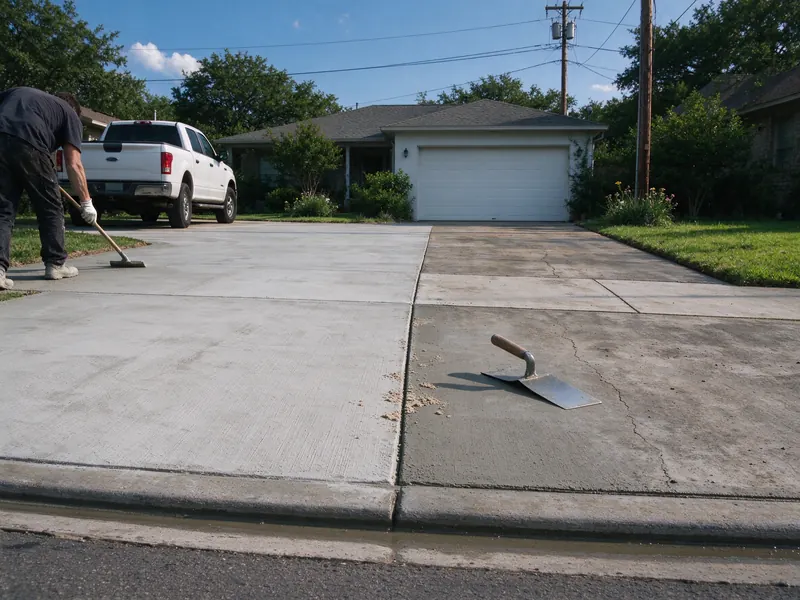
What this work looks like
Questions about driveway curb cuts
Do I need a permit to add a curb cut to my Houston property?
Yes, in practice. Work in the public right-of-way needs approval from the road authority. Inside the City of Houston, the residential driveway, sidewalk, or curb and gutter permit covers new entrances, with plan review and inspections. County, suburban city and state roads have their own processes, so the address and the road decide which applies.
Can I widen my existing driveway entrance?
Often, but the authority decides the width and position. Widening changes the curb, the approach and sometimes the sidewalk, so it is reviewed as new work rather than a repair. Fixed features such as meters, inlets and trees can limit the added width. The approved plan sets the final dimensions.
What happens to the sidewalk when a curb cut is built?
The sidewalk continues across the new entrance. Panels in the path of the drive are usually removed and rebuilt to carry vehicles while keeping a walkable surface and cross slope. The approved plan shows how the sidewalk and approach meet, and the inspection checks that the walking route is restored.
How long before I can drive over a new driveway approach?
That depends on the concrete, the weather and the instructions for the specific pour. New concrete gains strength over days, and turning tires load an approach harder than straight travel. We provide return-to-use instructions for the actual work and explain how the property will be accessed in the meantime.
My street has a ditch instead of a curb. Is that still a curb cut?
Not exactly. On an open-ditch street, a new entrance usually crosses the ditch on a culvert with an approach built over it. The pipe and its placement are part of the permit review, and Houston requires the culvert to be in place before inspection. The drainage questions matter as much as the pavement.
Related planning guides
Get a scope you can compare
Share the address, the street type and the entrance you have in mind. We will help define the permit questions and the work involved.
Get an Estimate