
Houston driveway services
Stamped concrete driveway repair in Houston
Stamped concrete driveway repair in Houston deals with two layers of problems: the slab itself, which can crack, settle or spall like any concrete, and the decorative surface, whose color, pattern and sealer wear on their own schedule. A good repair separates those layers, fixes the structural problem first and then restores the finish as closely as the material allows.
Get an Estimate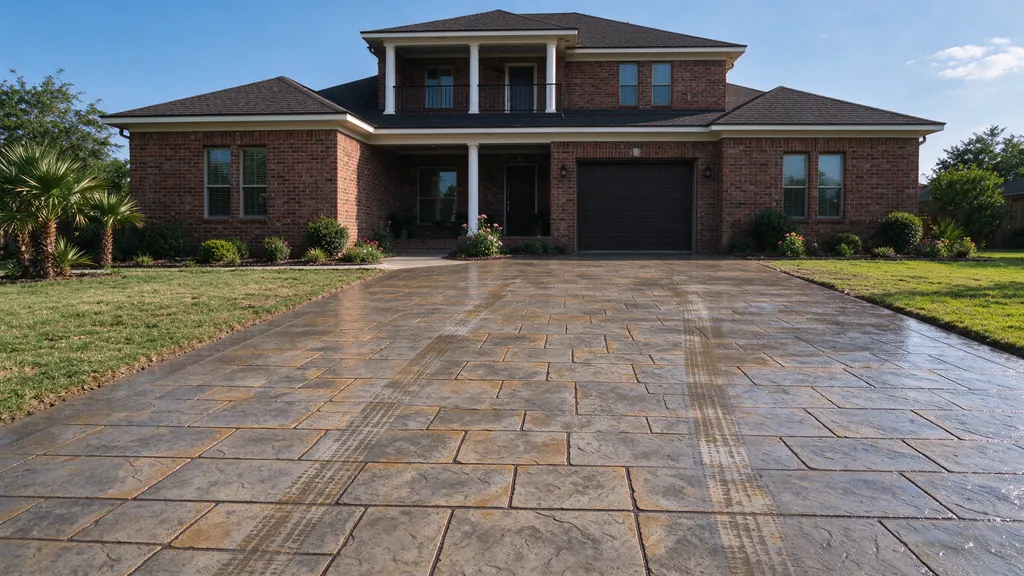
How stamped concrete is built
At Surefoot Houston Driveway Repair, we offer and manage repair of stamped and other decorative concrete driveways, including exposed-aggregate surfaces. Stamped concrete is an ordinary concrete slab with a decorative surface. While the concrete is still plastic, a color hardener or integral color provides the base color, a release agent keeps the stamping mats from sticking and adds an accent tone, and textured mats press a pattern such as stone, slate or brick into the surface. After curing, the surface is usually sealed.
That construction matters for repair. The slab carries the load and depends on its base, just as plain concrete does. The color, texture and sealer are thin surface layers. A faded or blotchy driveway may need only surface work, while a cracked or sunken one needs slab work first, and slab work will always affect the decorative surface around it.
Common problems and what they mean
Faded, chalky or uneven color usually comes from worn sealer and sun exposure on the surface layer. A white, cloudy look in the sealer, often called blushing, usually means moisture trapped under a film-forming sealer. Peeling or flaking sealer points to a coating that has failed or was applied too thick. These are finish problems.
Cracks, sunken sections, lifted edges and spalling are slab problems. In stamped concrete they are more visible because they cut through the pattern. The causes are the same as in plain concrete: movement in the base, shrinkage, missing or poorly placed joints, and water. Our guides to hairline and moving cracks and concrete spalling explain how to read them.
Restore the finish: cleaning, color and sealer
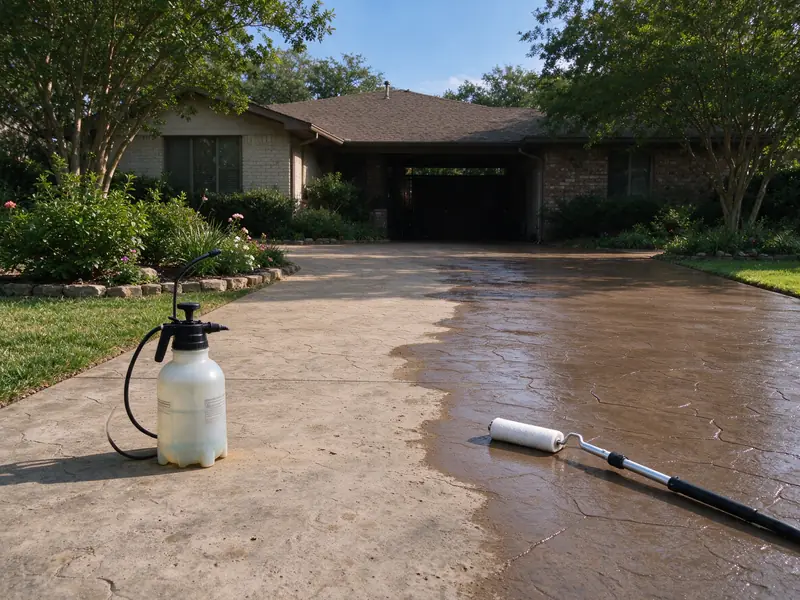
Many stamped driveways look much better after a thorough cleaning and new sealer. Old, failing sealer is stripped or removed where it has blushed or peeled, the surface is cleaned, and color can be revived with stains or tinted sealers that bring back the base and accent tones. A fresh sealer then deepens the color and protects the surface.
Sealer choice matters on a driveway. Glossy film-forming sealers can become slippery when wet, so a slip-resistant additive is often mixed in for vehicle and foot traffic. Breathable products reduce the chance of moisture clouding. Our concrete and paver sealing service covers sealer types and reapplication in more detail.
Repair cracks without making them stand out
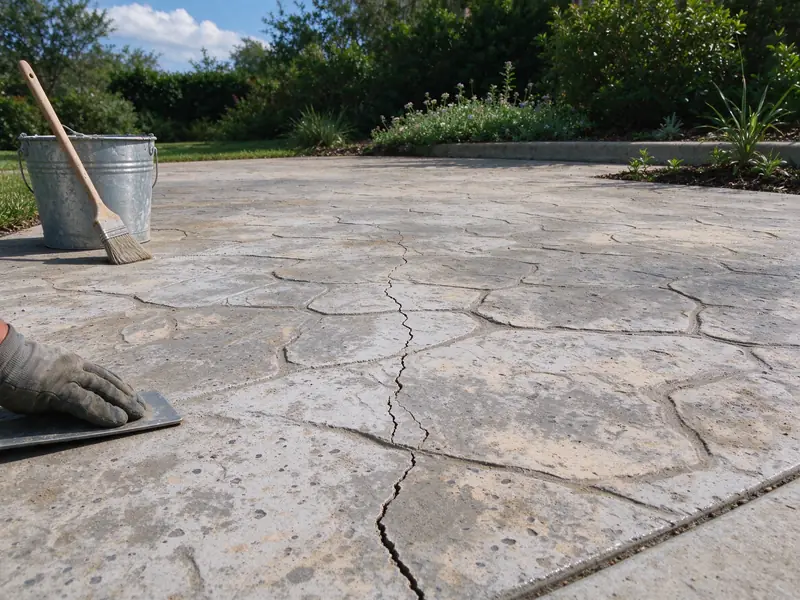
Stable hairline cracks are often best left alone or filled with a color-matched flexible filler, because aggressive routing and patching can make them more noticeable. Wider or moving cracks need a filler that tolerates movement, and the edges can be tinted to blend with the pattern. A crack that runs along a grout line in the stamped pattern is easier to hide than one that cuts across a stone texture.
We are honest about appearance: a repaired crack in stamped concrete remains visible up close. Coloring the filler and the surrounding area reduces the contrast, but it does not erase the line. The driveway crack repair service covers crack methods for concrete in general.
Let's look at your stamped driveway
Tell us whether the problem is the color, the sealer, cracks or a section that has moved.
Request a stamped concrete assessmentWhen a section must be replaced
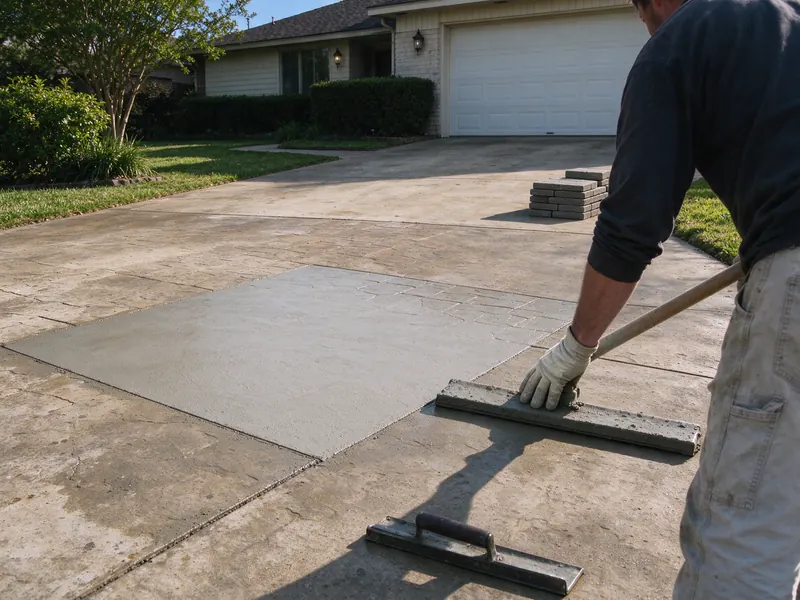
Sunken, heavily cracked or spalled sections may need removal and replacement. In stamped concrete, the replacement is cut along a joint or a pattern line where possible, new concrete is placed and colored, and the pattern is stamped with mats that match the original as closely as can be found. Matching is the hard part: the original mats may no longer be available, and new color will differ from weathered color.
Where only settlement is the problem and the slab is intact, leveling can lift the section without disturbing the pattern, though injection holes need to be patched and tinted. Our leveling versus panel replacement guide explains how to choose. If damage is widespread, resurfacing with a decorative overlay or replacing the whole driveway may give a more uniform result than many patches.
Why Houston conditions matter
Clay soils that change volume with moisture, described by Harris County Flood Control as part of the region's flat terrain and clay soils, can move any slab. Long, hot summers wear down sealers and fade surface color on exposed driveways. Those conditions shape the maintenance schedule for a decorative surface, though no general climate fact proves the cause of a particular crack. We assess the driveway in front of us rather than assigning every problem to the weather.
What changes the price of stamped concrete repair
Finish work is priced by area and condition: how much old sealer must be stripped, whether recoloring is needed and the sealer system chosen. Slab repairs add crack treatment by length, section replacement by area, and the work of color and pattern matching. Access, protecting landscaping and the number of separate repair areas also matter. Compare proposals with our quote comparison guide, and check whether each includes stripping, recoloring and the sealer type.
What this work looks like
Questions about stamped concrete repair
Can faded stamped concrete be restored without replacing it?
Often, yes. Cleaning, removing failed sealer, reviving color with stains or tinted sealer and applying a fresh sealer can bring back much of the original look. Restoration works when the slab itself is sound; cracks and sunken sections need repair first.
Why has the sealer on my stamped driveway turned white?
A white or cloudy sealer usually means moisture is trapped beneath a film-forming coating. It can also come from a coat applied too thick or in humid conditions. The affected sealer is typically treated or removed and the surface resealed with a suitable product.
Can a new stamped section match my existing driveway?
Rarely exactly. Pattern mats, color sources and weathering differ. Cutting the repair along joints or pattern lines and tinting the new section reduces the contrast. Where many sections are damaged, a uniform resurfacing may look better than several patches.
Is stamped concrete slippery when it is sealed?
Glossy sealers can make stamped concrete slick when wet. A slip-resistant additive mixed into the sealer improves traction, and some sealer types leave a lower-gloss finish. The choice should consider foot traffic and the slope of the driveway.
Do you repair exposed aggregate driveways too?
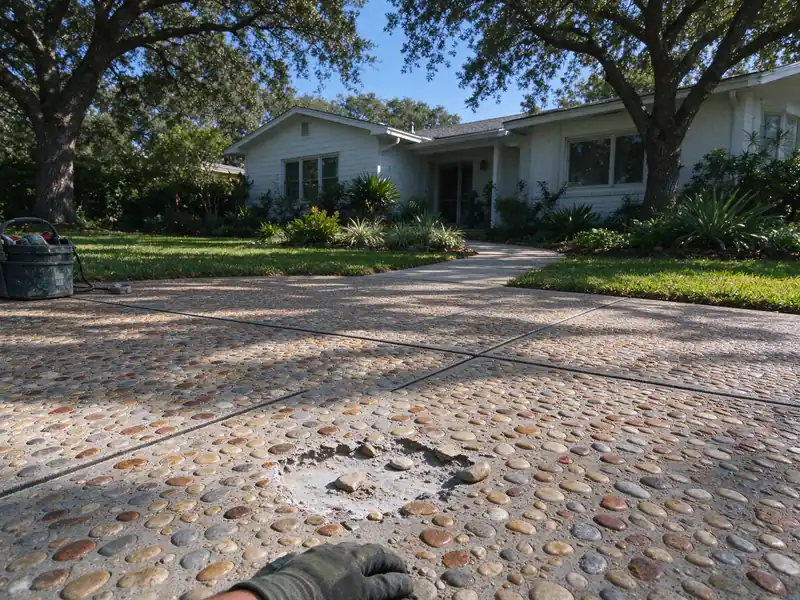
Yes. Exposed aggregate has its own repairs, such as loose stones and worn areas, and section replacement needs a similar stone mix and exposure. As with stamped concrete, an exact match with weathered surfaces is unlikely.
Related planning guides
Get a scope you can compare
Share the address, photographs of the stamped surface and the problems you see. We will help define the right repair.
Get an Estimate