
Houston driveway services
Concrete driveway resurfacing in Houston
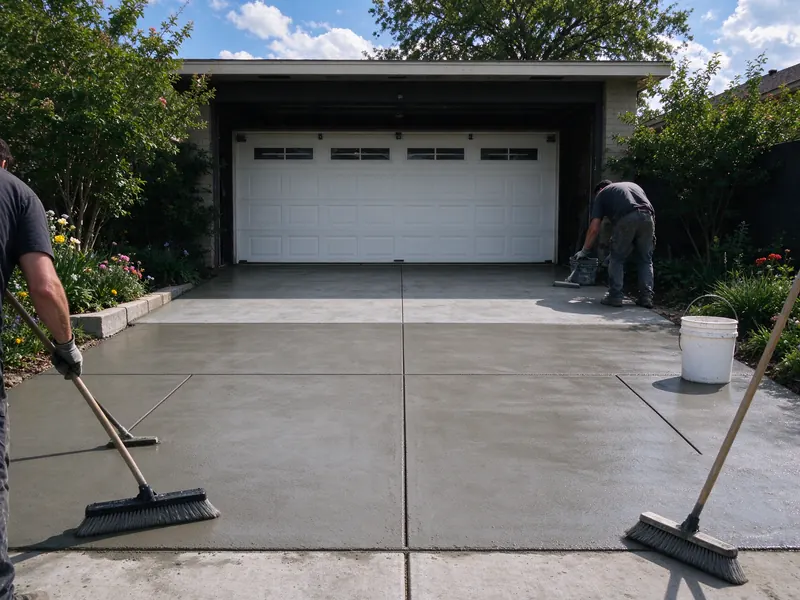
Concrete driveway resurfacing in Houston renews a suitable existing surface with a specified repair or overlay system. It is useful only when the retained concrete can support that treatment. We assess surface deterioration, coatings and movement before recommending a new finish over the old slab.
Get an Estimate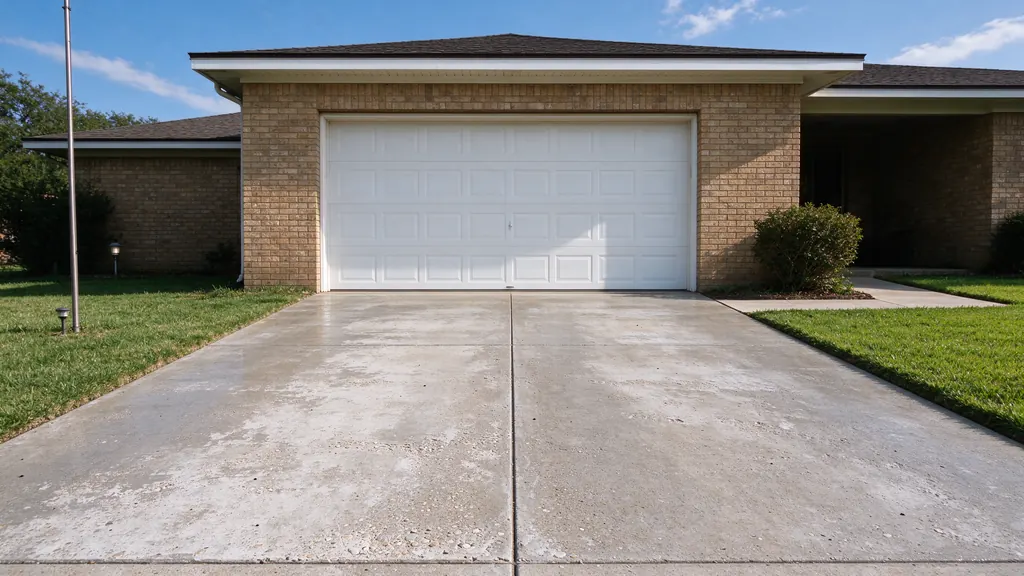
Establish whether the problem is at the surface
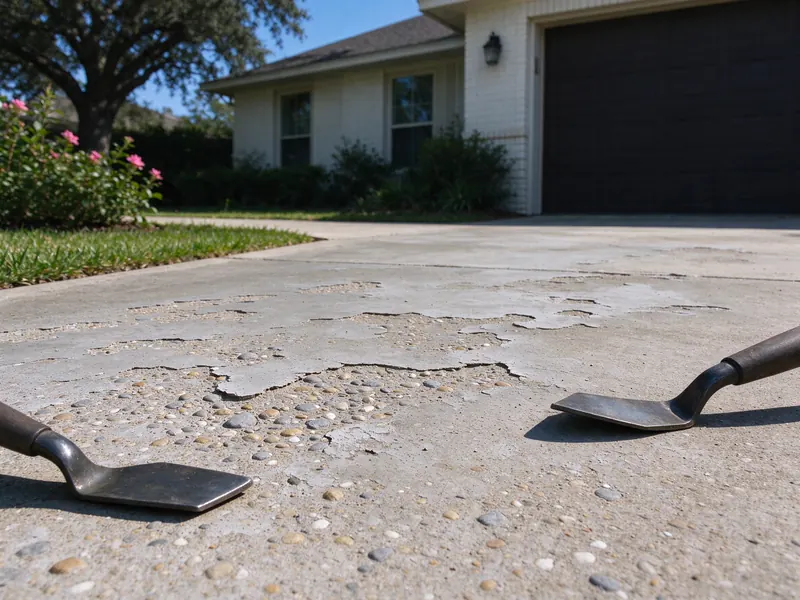
At Surefoot Houston Driveway Repair, we offer and manage concrete resurfacing where the underlying pavement remains a suitable candidate. Peeling, pitting and worn texture can make a driveway difficult to maintain, but those symptoms do not all have the same cause. A surface treatment needs a sound foundation to perform as intended.
We distinguish surface loss from a slab that has fragmented, settled or continued to move. The concrete spalling guide explains why the depth and extent of deterioration matter. When the problem reaches through the panel, selective replacement may be a more appropriate scope.
An overlay depends on preparation and compatibility
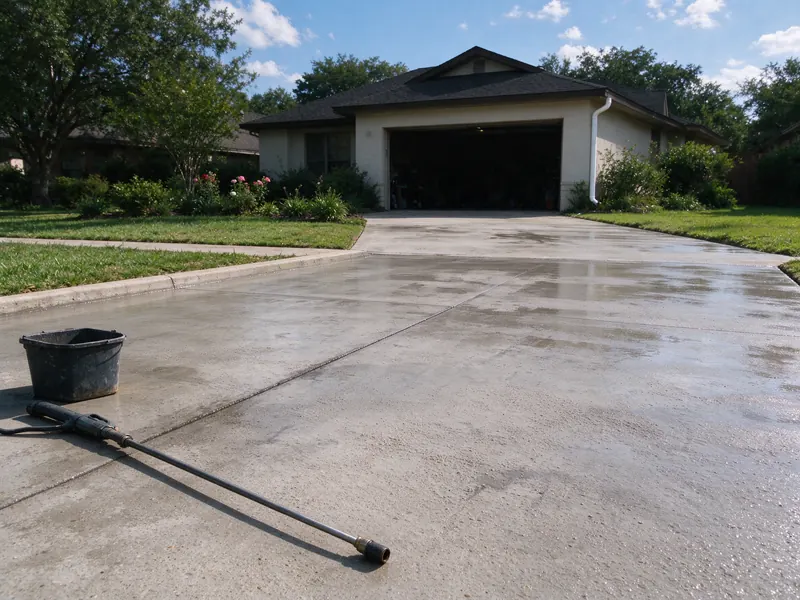
The selected system must bond to concrete capable of accepting it. Loose surface material, oils, coatings and failed patches can interfere with that bond. Cleaning is part of preparation, but a clean-looking slab is not automatically ready. Unsound material may need removal, and the surface profile must suit the product.
We describe the proposed preparation rather than pricing only the visible finish. Existing sealers or paint may affect feasibility and cost. A thin treatment cannot make weak concrete strong merely by covering it. Our broader concrete repair service includes assessing localized defects that need attention before a surface system is considered.
Moving cracks and joints need a plan
An overlay does not stop the slab beneath it from moving. A crack can reflect through a new surface if its cause or movement remains. Joint locations must also be respected. Treating a planned opening as though it were continuous pavement can transfer the problem into the finish.
We identify which crack repairs and joint details are included. Where a panel has settled, leveling eligibility needs separate review. The resurfacing proposal should state the limits of the result, including which existing lines may remain visible and why.
Check the added surface against thresholds and runoff
Even a relatively thin treatment changes the finished surface. The garage threshold, gate clearance and adjoining panels can limit what is practical. Water still needs a workable route off the driveway. A finish chosen only for appearance can leave these relationships unresolved.
We assess low areas and the intended finished elevations before defining the work. Resurfacing is not an open-ended promise to regrade the driveway or solve drainage elsewhere on the property. Read about pooling water if that is the main reason you are considering the project. The treatment needs to address the actual concern, not just make it less visible.
Let's define the work your driveway needs
Tell us what has changed and which part of the driveway is affected.
Request a driveway assessmentChoose texture for how the driveway is used
The finished texture affects the look and the way the surface behaves under foot and vehicle traffic. We discuss the proposed finish, including any maintenance instructions associated with it. A decorative appearance should not be selected without considering the intended use and the product's requirements.
Turning wheels and concentrated loads can be demanding on a driveway surface. We do not promise that a treatment is stain-proof, maintenance-free or suitable for every vehicle. Where commercial vehicles use the entrance, commercial access planning helps define the actual loading and service conditions before a surface system is chosen.
Compare the complete resurfacing scope
The proposal should identify the prepared area, repairs required first, the resurfacing system and the intended finish. It should explain treatment of joints and edges, protection during curing and any restoration beside the driveway. Optional decorative work should be separated from the preparation needed for the basic repair.
An estimate that omits removal of incompatible material may not describe the same job as one that includes it. Our quote comparison guide helps make those differences visible. If extensive preparation leaves little suitable concrete, compare the cost and limits with replacement before committing.
Protect the finish and understand its limits
Weather and product requirements affect application and return to use. We provide the applicable instructions for foot traffic, parking and maintenance. A surface that appears dry may still need protection. Do not assume the instructions for an old sealer apply to a new overlay system.
Resurfacing can create a more consistent appearance, but it is not a guarantee against future cracking or color variation. Our appearance guide describes what can remain visible. The Houston cost guide explains why preparation and repair eligibility matter more than comparing a finish-only price per square foot.
Useful information before the assessment
If a previous coating is present, tell us what was applied and when, if you know. Product labels or old invoices can help identify compatibility questions without requiring you to strip or test the surface yourself.
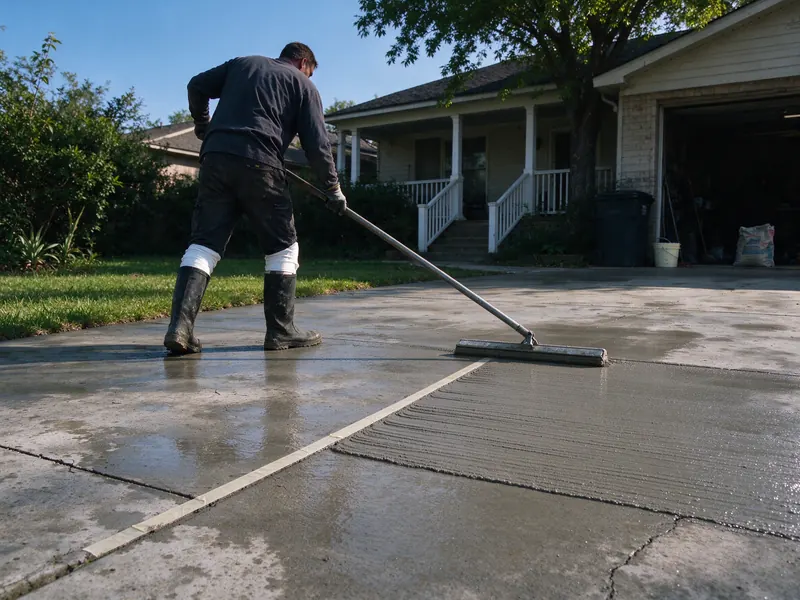
What this work looks like
Questions about concrete driveway resurfacing
Is resurfacing the same as painting the driveway?
No. Resurfacing can involve a specified bonded cementitious or other repair system, with preparation and thickness requirements that differ from a coating. We identify the actual system in the proposal. The term alone is not enough to compare two estimates or predict how the finished driveway will behave.
Can an overlay hide every existing repair?
It may reduce some visual differences, but an invisible result is not promised. Movement, repair boundaries and texture can influence the finish. We assess whether the appearance you want is realistic before recommending work primarily intended to blend previous patches.
What if only the tire tracks are worn?
We assess the surrounding concrete and the reason for the wear before deciding whether localized repair or a wider treatment makes sense. A small treated strip can look different and have different edge conditions from a complete surface. The repair boundary should be chosen deliberately.
Can resurfacing raise a low driveway enough to prevent flooding?
That is not a promise we make. A surface treatment has limits on thickness and application, and site flooding may involve drainage beyond the driveway. We check the available elevations and describe the actual improvement the proposed work can reasonably address.
Will I need to maintain a resurfaced driveway differently?
Possibly. Cleaning methods, sealers and return-to-use restrictions depend on the selected system. We provide the applicable care instructions and identify any ongoing treatment that belongs to that system. Avoid treating an advertised finish as permanently maintenance-free.
Related planning guides
Get a scope you can compare
Share the location, surface type and problem you want to address. We will help define the appropriate next step.
Get an Estimate