
Houston driveway services
Concrete and paver driveway sealing in Houston
Concrete and paver driveway sealing in Houston applies a protective sealer that reduces water absorption, resists oil and stains and, on pavers, helps hold the joint sand in place. Sealing protects a sound surface. It does not repair cracks, settlement or loose pavers, so any repair comes before the sealer.
Get an Estimate
Sealing is different from asphalt sealcoating
At Surefoot Houston Driveway Repair, we offer and manage sealing for concrete, stamped concrete and paver driveways. This is a different product and process from asphalt sealcoating. Sealcoat is a black coating made for asphalt pavement, covered on our asphalt sealcoating page. Concrete and paver sealers are clear or tinted products that either soak into the surface or form a thin film on top.
Neither type of product is structural. A sealer will not close a moving crack, raise a sunken panel or lock down pavers on a failed base. Our sealcoating versus resurfacing guide explains why surface coatings and structural repairs do different jobs.
Penetrating and film-forming sealers
Penetrating sealers, such as silane and siloxane products, soak into concrete and react below the surface to repel water while leaving the surface looking much as it did. They do not change texture or gloss and are less slippery, but they do not deepen color. They suit plain broom-finished driveways where the goal is protection rather than appearance.
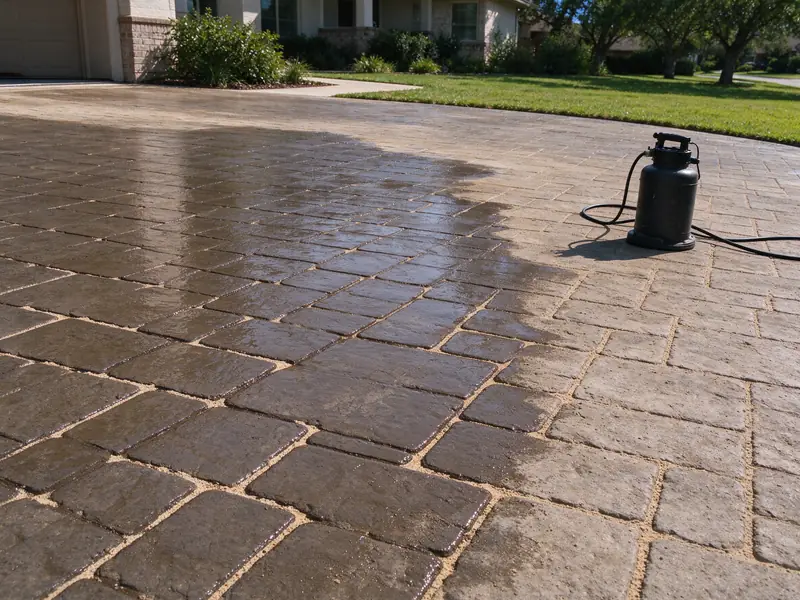
Film-forming sealers, such as acrylics, sit on the surface and give a wet look or a sheen that deepens color. They are common on stamped concrete and pavers. They wear faster under traffic, need periodic reapplication and can become slippery when wet unless a slip-resistant additive is used. A film that traps moisture can turn white or cloudy. The right choice depends on the surface, the look you want and how much maintenance you accept.
What sealing can do on a Houston driveway
Concrete is porous. Water, oil, fertilizer runoff and tire marks soak into an unsealed surface and stain it. A sealer slows that absorption so stains stay on top long enough to clean, and it reduces the water that reaches the surface paste. On pavers it can stabilize joint sand so it washes out less in heavy rain and resists weeds and ants.
The National Weather Service lists a normal annual rainfall of 51.84 inches at Bush Intercontinental, and long summers expose driveways to strong sun. Rain and sun shorten the life of film-forming sealers in particular, so reapplication is part of the plan. We do not promise a fixed lifespan, because it depends on the product, the traffic and how the driveway is maintained.
Preparation decides the result
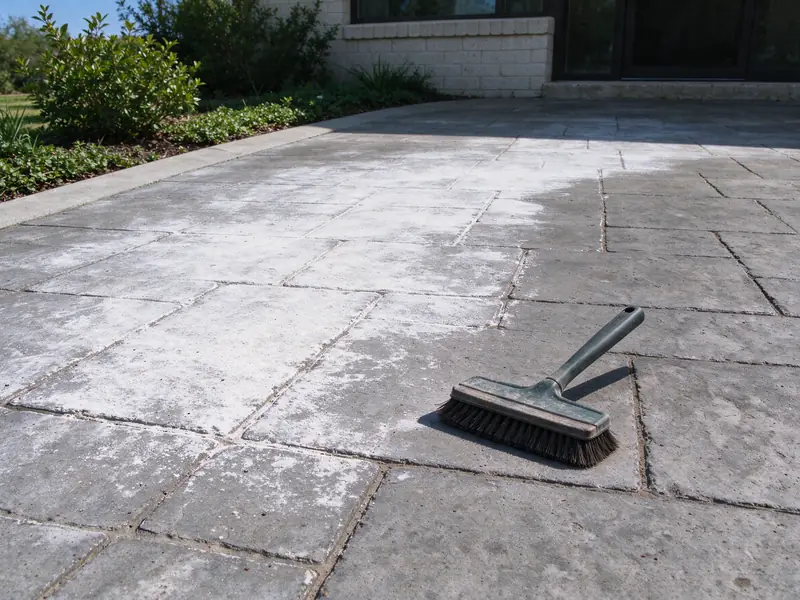
A sealer bonds only to a clean, dry, sound surface. Preparation usually includes pressure washing, degreasing oil stains, removing efflorescence (the white mineral deposit that forms on concrete and pavers), and stripping old sealer that has peeled or clouded. The surface must then dry fully before sealing, which in humid weather can take longer than expected.
New concrete has to cure before most sealers are applied; the product's instructions set the wait. Cracks, spalls and settled sections should be repaired first, because sealing over them locks in the problem and makes later repair harder. Our crack repair and concrete repair services cover that work.
Let's protect your driveway
Tell us the surface, how it looks now and whether it has been sealed before.
Request a sealing assessmentSealing a paver driveway
Paver sealing starts with the joints. The pavers are cleaned, damaged or sunken units are reset, and the joints are refilled with sand and compacted. A joint-stabilizing sealer can then bind the top of the joint sand so it resists washout. Sealing over empty joints or over pavers that have already settled preserves the defects. Our paver driveway repair service covers resetting units and edge restraints before sealing.
Polymeric joint sand is an alternative to a joint-stabilizing sealer; the two should not be combined without checking product compatibility. A sealer can also darken the color of pavers, so a test area shows the result before the whole driveway is coated.
Stamped and decorative concrete
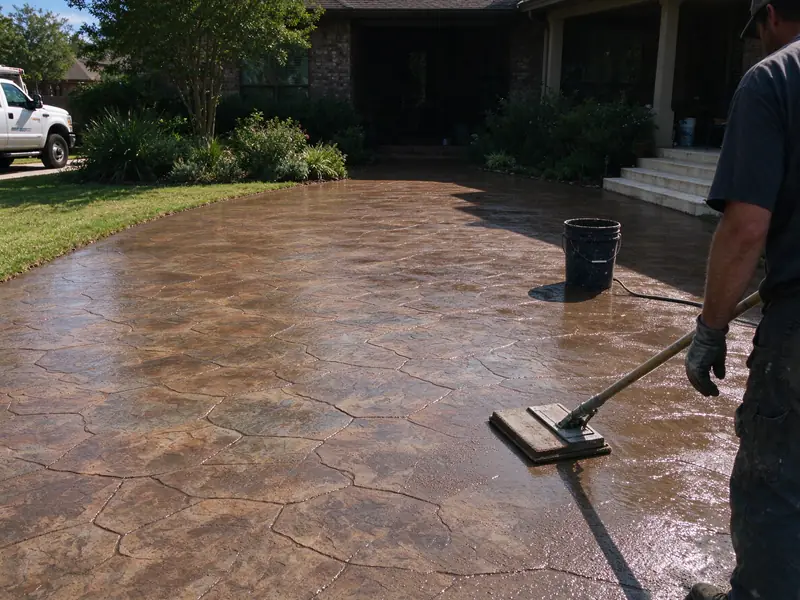
Stamped and colored concrete relies on its sealer for both protection and appearance. Over time the sealer wears and the color dulls. Resealing, sometimes with a tinted product, restores the look. Where old sealer has failed, it is removed first. The stamped concrete repair service covers recoloring and slab repairs on decorative driveways.
What changes the price of sealing
Sealing is priced by area, the type of sealer and the preparation needed. Stripping old sealer, removing oil stains or efflorescence, joint sand work on pavers, and a slip-resistant additive add to the cost. Access, the number of coats and the time needed for drying in humid weather also matter. Use the quote comparison guide to check that each proposal names the product type, the preparation and the number of coats.
What this work looks like
Questions about concrete and paver sealing
Should I seal my concrete driveway?
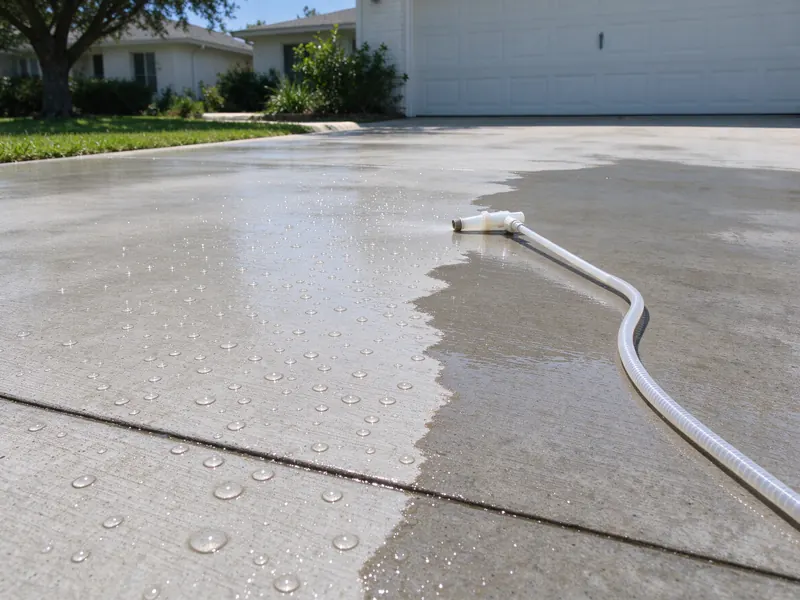
Sealing is optional maintenance. It reduces staining and water absorption and can make cleaning easier. A plain driveway is often protected with a penetrating sealer that keeps its natural look. Sealing does not repair existing damage, so cracks and settlement should be addressed first.
How often does a concrete or paver driveway need resealing?
It depends on the sealer type, traffic and exposure. Film-forming sealers wear faster and are reapplied more often than penetrating sealers. Signs it is time include water soaking in instead of beading, dull or uneven color and joint sand washing out of pavers.
Will sealing make my driveway slippery?
Penetrating sealers barely change the surface. Glossy film-forming sealers can be slippery when wet, especially on smooth or sloped driveways. A slip-resistant additive in the sealer improves traction. The choice should balance appearance against safety.
Can pavers be sealed if the joints are empty?
They should not be. Empty joints let pavers shift, and sealing locks in the problem. The joints are refilled with sand and compacted first, and loose or sunken pavers are reset. A joint-stabilizing sealer then helps keep the sand in place.
What is the white haze on my pavers and concrete?
It is often efflorescence, a mineral deposit carried to the surface by moisture, or cloudy sealer from trapped moisture. Efflorescence is cleaned off with a suitable cleaner before sealing. Cloudy sealer is treated or removed and reapplied in dry conditions.
Related planning guides
Get a sealing scope you can compare
Share the address, the surface type and photographs of its current condition. We will help define the right sealer and preparation.
Get an Estimate