
Houston driveway services
Driveway leveling in Houston
Driveway leveling in Houston can raise a settled concrete panel when the slab remains suitable for lifting. We check its condition, support and relationship to the garage, sidewalk and nearby panels before recommending the work. Leveling changes elevation; it does not repair every crack or cure every cause of ground movement.
Get an Estimate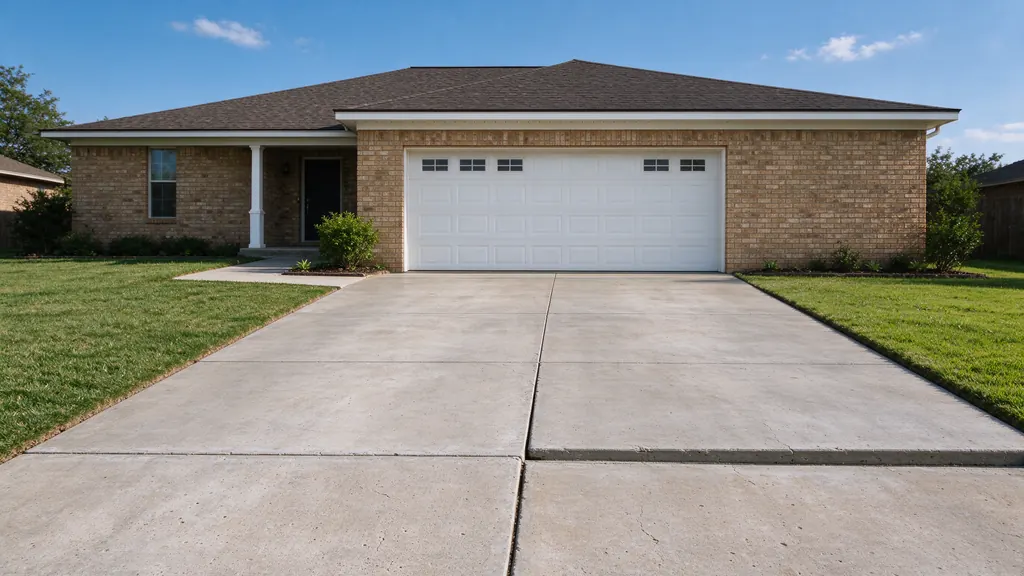
Decide whether the slab is worth lifting
At Surefoot Houston Driveway Repair, we offer and manage leveling for eligible concrete driveway sections. A low panel may create a wheel bump, collect water or leave a difficult walking transition. Before selecting a lifting method, we assess whether the concrete can tolerate the operation and whether the proposed height improves the whole driveway. Where lifting suits the slab, the work uses either foam injection or mudjacking.
A badly fragmented panel may not be a suitable candidate. Concrete can also be too deteriorated at its edges to give the result you need. In those cases, panel replacement provides access to the supporting material and a different repair path. Our leveling comparison guide explains that choice.
How lifting changes the support beneath concrete
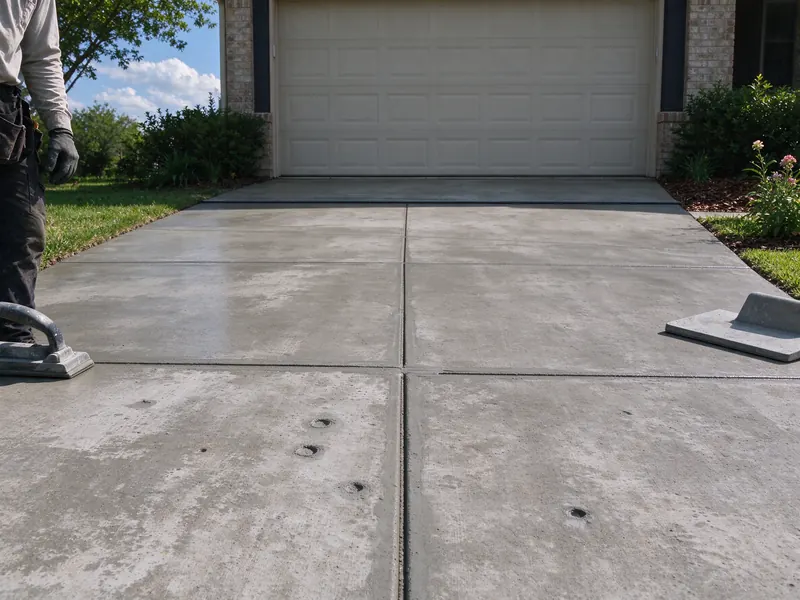
Leveling generally introduces a selected material below the existing concrete through access holes. The operation fills relevant spaces and applies controlled lift, with the result checked against the intended elevations. Material choice, injection arrangement and control of the lift depend on the slab and underlying conditions.
We offer both polyurethane foam lifting and cement-based mudjacking, also called slabjacking. They are different approaches, and neither is selected simply because one sounds newer or uses smaller access holes. Weight, access, the condition being treated and the proposed result all matter. The foam versus mudjacking guide explains the practical distinctions without treating either method as a universal winner.
A low panel is not the same as a raised panel
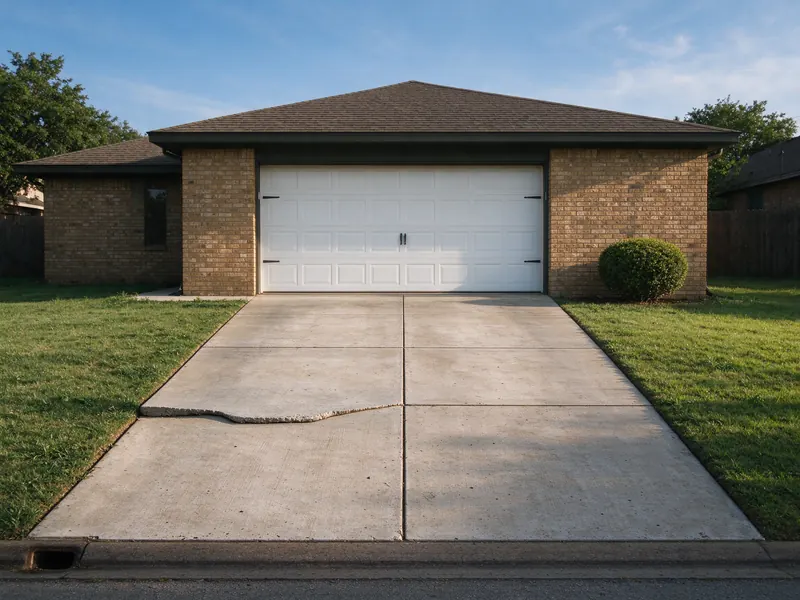
A slab can appear low because the neighboring one has risen. It can also have settled as supporting material changes or is lost. We compare fixed references and the surrounding driveway rather than assuming the lowest-looking piece should always move upward. Lifting the wrong section can create a poor transition somewhere else.
The garage threshold and sidewalk are especially important references. So are the route for runoff and the street approach. If the concern is heave or an obstruction below the slab, sinking and heaving need separate consideration. Suspected roots are assessed as a possible factor, not diagnosed from a ridge alone.
Grinding removes material rather than raising a panel
Grinding may be considered for an eligible, limited raised lip, but it changes the concrete surface by removing material. It does not fill a void, restore support or stop continued heave. Remaining slab thickness, reinforcement, the size of the transition and the required finish limit where it is suitable. We assess that option separately instead of treating it as interchangeable with lifting. A larger height problem or unsuitable concrete can require replacement rather than either method.
Drainage expectations need to be specific
Raising a panel can change its relationship to adjoining surfaces, but leveling is not a promise that all standing water will disappear. The available elevation may be constrained by a building, another panel or the public approach. A broader drainage problem can remain even after a trip edge is improved.
We describe the intended result in terms that can be checked: the transition being improved and the practical elevation limits. Our pooling-water guide explains why pavement slope and the receiving area both matter. If erosion or support loss is suspected, the scope also considers the condition beneath the slab.
Let's define the work your driveway needs
Tell us what has changed and which part of the driveway is affected.
Request a driveway assessmentWhat belongs in a leveling estimate
The estimate should identify the panels included, the proposed method and the target changes. It should state how access holes will be finished, which joint or crack repairs are included and which visible differences may remain. A lift is not automatically a complete cosmetic repair of the driveway.
We also discuss limits before starting. An existing crack may remain visible, and a slab may not move exactly as hoped. The proposal should explain how unexpected conditions are handled. Compare written scopes using our quote guide, especially when one price includes joint work and another covers only the lifting operation.
Budget from the scope of the actual lift
For planning, Houston residential concrete leveling can fall around $500–$2,500+, with larger or more difficult work extending beyond that range. It is a project range, not a quote for every driveway and not a promise that any slab is liftable. The number of affected sections, access and the supporting condition change the work.
We do not turn driveway area into an exact bill before the panels are assessed. The Houston driveway repair cost guide explains the published range and its limits. A useful estimate describes what the price buys, including preparation, finishing and any separately priced repair.
Plan the return of vehicles and monitor changes
The selected system and site conditions determine when the driveway can be used again. We provide the applicable instructions and explain any restrictions at repaired holes or adjoining joints. A product's general set time is not permission to drive across every newly completed section without checking the project instructions.
After work, keep the agreed scope and photographs so later changes can be described accurately. Leveling does not freeze the ground or guarantee that no future movement will occur. New erosion, a leaking source of water or changing loads can affect the driveway. Our return-to-use guide explains the questions to settle before parking resumes.
What this work looks like
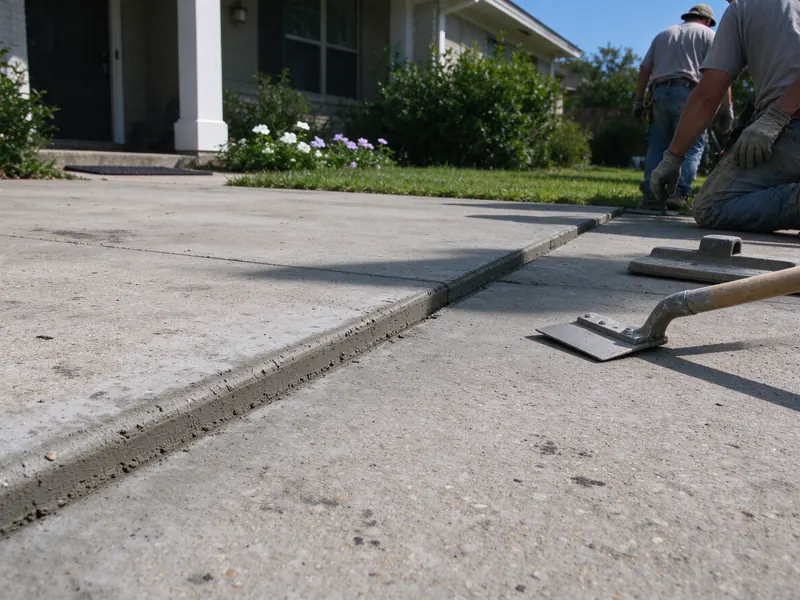
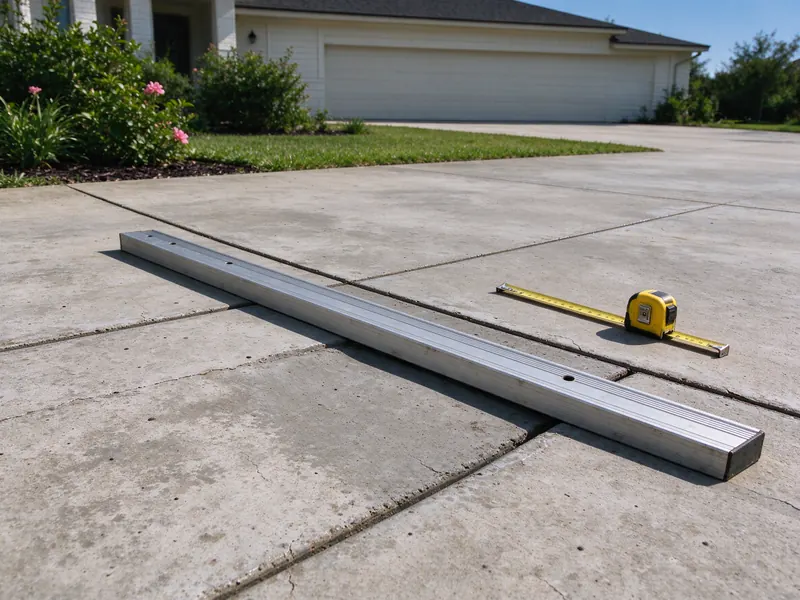
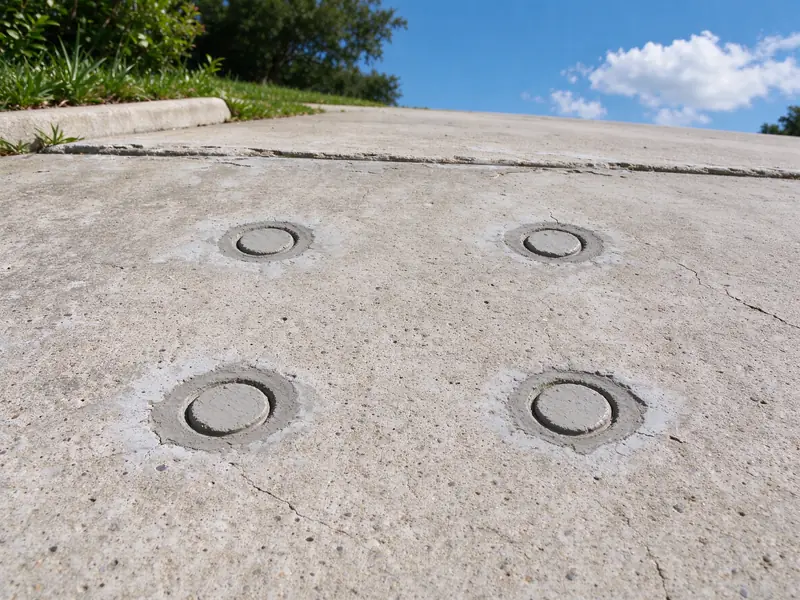
Before and after
Questions about driveway leveling
Can leveling close an existing crack between two pieces of concrete?
It may change the relative elevation of the pieces, but closing a crack is not the same as restoring the original continuous slab. The crack and its edges need their own assessment. We identify any separate crack or joint repair rather than implying that lifting automatically repairs the fracture.
Will injection holes match the original driveway exactly?
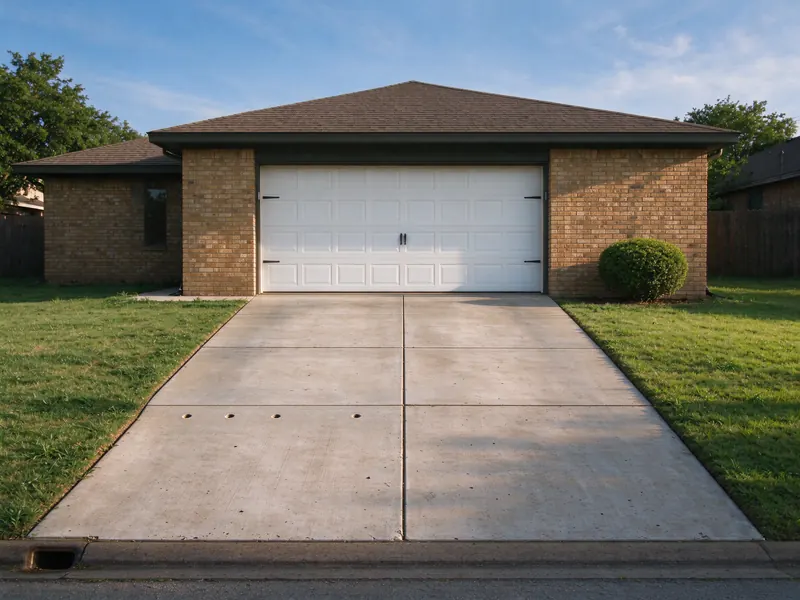
An exact match is not promised. Hole repairs can differ from weathered concrete in color or texture. We explain the expected finish before work and include the hole treatment in the scope so the appearance is part of the decision, not a surprise afterward.
Is a hollow sound enough to order a lift?
No. A sound difference is a reason for further assessment, not a measurement of the space below the slab. The recommendation also considers elevation, movement, the concrete condition and the cause of your concern. We do not select the lift amount from sound alone.
Can a settled panel beside a sidewalk be raised independently?
It depends on the connections, the intended transition and the authority responsible for the affected area. We check the public-private boundary and fixed elevations before defining the work. Improving the driveway should not leave a new obstruction at the walking route.
Does the leveling price include replacing a broken corner?
Only when the written scope includes that repair. Lifting, rebuilding edges and treating joints are related tasks with different preparation. We itemize the proposed work so you can compare an estimate for lifting alone with one that also addresses the damaged concrete.
Related planning guides
Get a scope you can compare
Share the location, surface type and problem you want to address. We will help define the appropriate next step.
Get an Estimate