
Houston driveway services
Gravel driveway repair in Houston
Gravel driveway repair starts with the shape and support of the entrance, not simply another load of stone. Ruts, washouts and recurring soft spots can require different work. We assess the retained aggregate, the ground beneath it and the route for water before defining regrading or material replacement.
At Surefoot Houston Driveway Repair, we offer and manage this work for homes and commercial property access. We explain the proposed treatment, identify what it cannot fix and put the agreed limits in a written scope.
Get an Estimate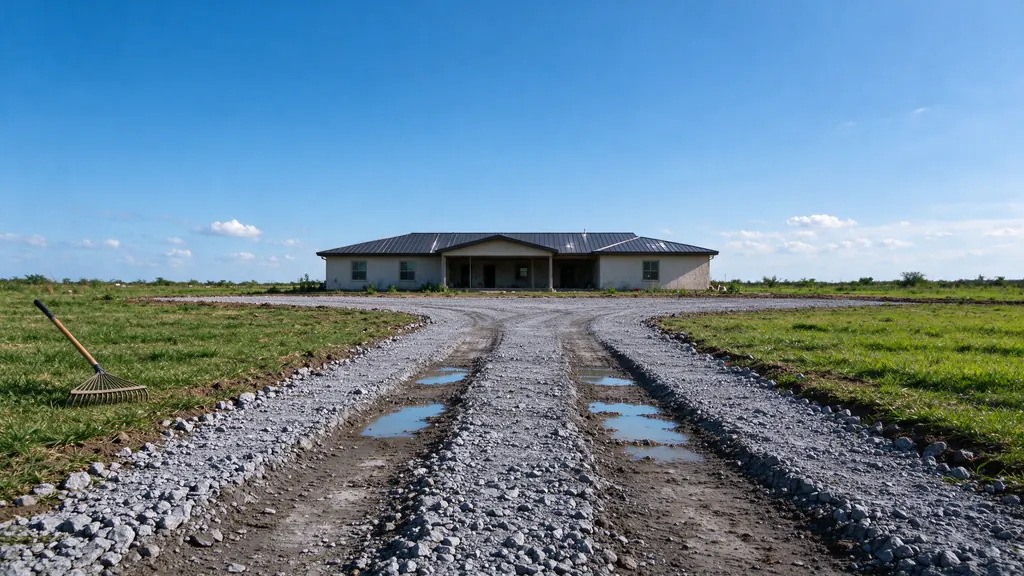
Separate surface displacement from weak support
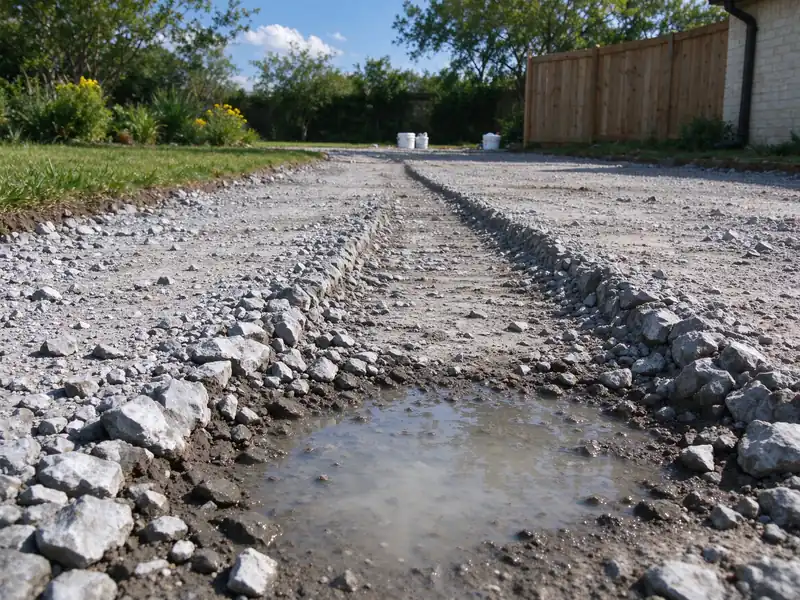
A gravel driveway carries vehicles through a compacted aggregate structure supported by the ground below. Material can move under tires, collect at the edges or be carried away by runoff. The surface may also rut because the underlying support is weak. Those conditions can look similar from a photograph but require different preparation.
We ask where the rut begins, whether it returns after grading and how it changes after rain. A shallow surface irregularity may be handled differently from a soft wheel path that persists through repeated additions of aggregate. Our muddy and rutted driveway guide explains why adding material without understanding the support can leave the original problem unresolved.
Regrading changes the shape, not just the appearance
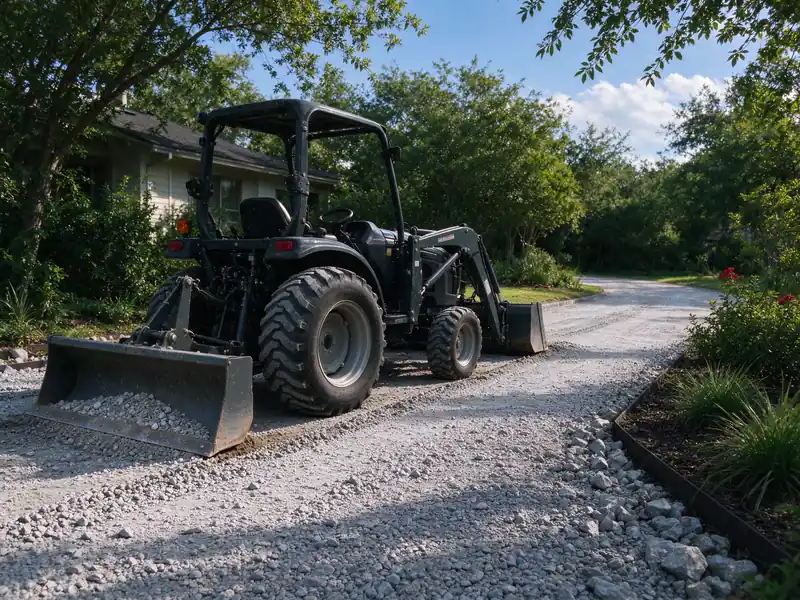
Regrading redistributes or reshapes suitable material to restore a practical surface profile. The intended shape must consider where runoff can go, how the entrance meets the road and what happens at buildings or adjoining land. A smooth finish alone does not establish that the driveway will shed water appropriately.
The available material and fixed elevations determine what grading can accomplish. If the entrance is constrained by a garage threshold, culvert or street level, those points need to be considered together. Our pooling-water guide explains the importance of a workable outlet. We do not assume that moving water off the tire tracks makes it acceptable to direct it toward a neighboring property.
Decide what aggregate can remain
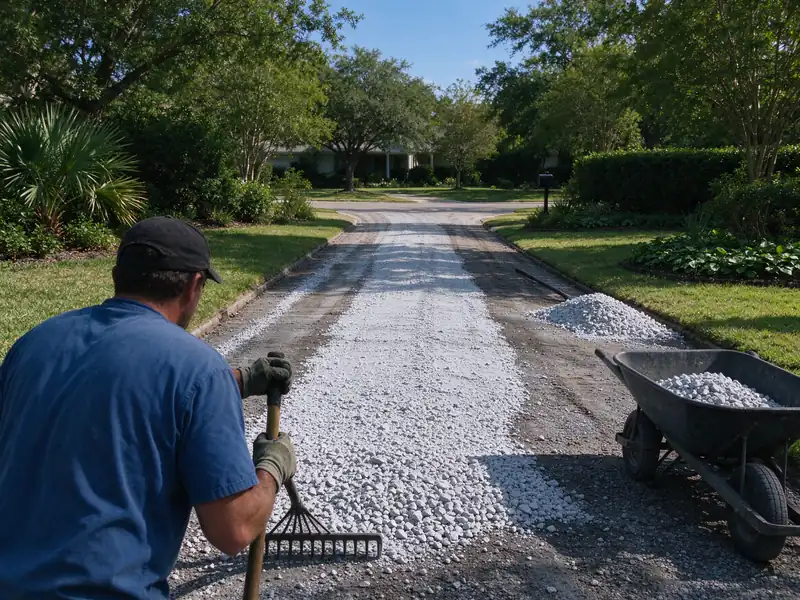
Existing material may be reusable where its condition and composition suit the repair. Aggregate mixed with excessive soil, organic material or other unsuitable content may not perform as intended when simply reshaped. We inspect the condition before specifying whether material is retained, supplemented or removed. The estimate should describe that distinction.
Material selection affects how particles fit together and how the repaired surface compacts. Decorative loose stone and a suitable driveway aggregate are not automatically interchangeable. We explain the proposed material in relation to the driveway’s use rather than promising that any stone delivery will solve rutting. The gravel, asphalt and concrete guide compares the different systems and their maintenance implications.
Address soft areas before covering them
Where the support is unsuitable, the repair may need localized removal and preparation below the visible surface. The extent cannot always be established before work exposes the area. We identify the assumptions and explain how additional findings will be assessed. A written concealed-condition procedure avoids treating every extra load of material as an unexplained addition.
Separation or stabilization measures may be appropriate in some situations, but they are not universal substitutes for addressing water and unsuitable ground. The detail needs to suit the actual conditions. Our base-failure guide explains the relationship between support and the surface above. We do not prescribe a fabric or reinforcement product solely because a driveway has become muddy.
Make the repair decision with the whole driveway in view
Tell us about the surface, the change you noticed and where access needs to remain available.
Request a driveway assessmentKeep runoff and the road entrance coordinated
At the street, the driveway may cross a roadside ditch or culvert. Regrading should not block that flow or bury a feature that needs to remain functional. Work involving an approach can have requirements that differ from work on the private drive. We confirm the address, road authority and proposed change before assuming the scope is unrestricted.
The apron repair page and Houston-area permit guide explain the boundary questions. We offer driveway restoration, and our driveway drainage service covers grading and drains that serve the driveway. If a successful repair depends on a wider drainage change, we identify it so the work can be coordinated rather than concealed inside a surface-maintenance promise.
Plan for the vehicles and the construction access
A gravel entrance used by passenger cars may have different demands from one used by delivery trucks or heavy trailers. Tell us where vehicles turn, wait and leave the main travel path. Those locations can be important to the repair boundaries. We do not infer a suitable construction detail from the overall length alone.
Access for delivery and compaction equipment also affects the work. Gates, overhead obstructions and limited staging space should be identified before scheduling. For business access, use our commercial access planning guide. If the property must remain occupied, we discuss how vehicle movement and pedestrian access can be managed during the actual repair sequence.
Compare restoration with a future surface conversion
Repairing a gravel driveway can be a deliberate choice, not simply a temporary step toward paving. The decision depends on use, maintenance expectations and the property constraints. If you want a paved entrance, gravel driveway conversion needs its own assessment. Existing aggregate is not automatically a finished base ready to receive asphalt or concrete.
Our material comparison tool helps frame the paved options. For a restoration proposal, compare grading, material quantities, preparation and disposal rather than only the delivered aggregate price. The quote comparison guide and cost guide explain why site-specific scope matters. We do not publish an unsupported universal gravel repair rate.
What this work looks like
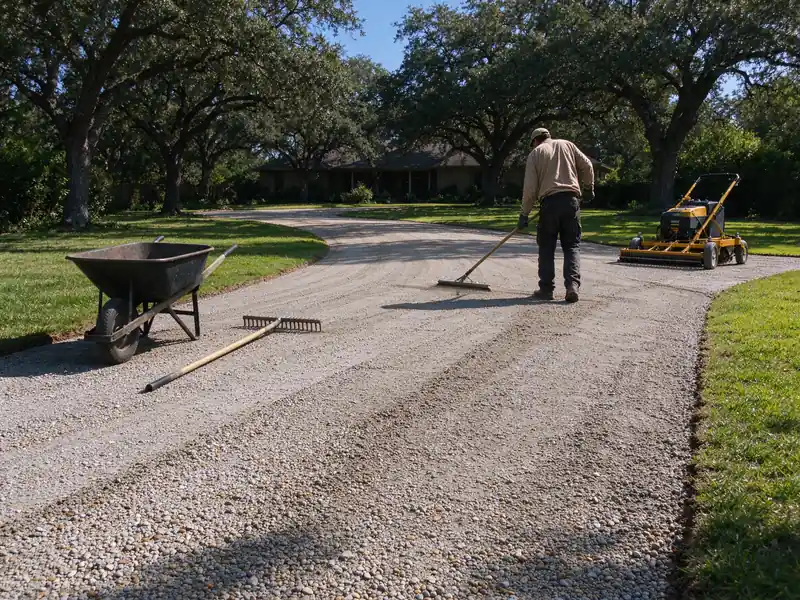
Questions about gravel driveway repair
Can regrading reuse gravel that has collected beside the tire tracks?
Possibly, if the material remains suitable and can be recovered without incorporating excessive soil or vegetation. The condition matters more than its location. We assess whether it can contribute to the repaired surface or whether new aggregate and additional preparation are needed.
Why do ruts return after another load of stone is spread?
The added material may not address weak support, water or the surface shape that contributed to the rut. The material itself and compaction can also matter. Recurrence is a reason to assess the complete driveway structure rather than assume the next delivery should simply be larger.
Will gravel repair stop all loose stones from moving?
No. Aggregate surfaces can require maintenance and may move under vehicle use. The repair aims to provide the agreed structure and shape, not a permanently fixed surface. We explain the expected maintenance implications so you can compare restoration with a paved conversion realistically.
Can a muddy entrance be repaired without changing the culvert?
That depends on the cause and the condition at the approach. Some problems are within the driveway surface or support, while others involve the drainage crossing. We assess those relationships and confirm any authority requirements before assuming that either culvert work or a surface-only repair is appropriate.
Is asphalt millings repair the same as ordinary gravel repair?
Not automatically. Reclaimed asphalt material has different characteristics from other aggregates, and its suitability depends on the intended detail and conditions. Tell us what is present if you know. We identify the retained material and proposed treatment rather than treating every unpaved-looking surface as identical.
Related driveway decisions
Let’s define the work your driveway needs
Send the property location and a description of the problem. Photographs from a safe position help us plan the assessment.
Get an Estimate