
Houston driveway services
Driveway extensions in Houston
A driveway extension in Houston widens an existing driveway or adds a parking pad beside it, including pads for an RV, boat or trailer. The new pavement has to join the old driveway cleanly, carry the vehicles that will park on it and send its runoff somewhere suitable. Inside the City of Houston, the city's driveway permit specifically covers extending a driveway.
Get an Estimate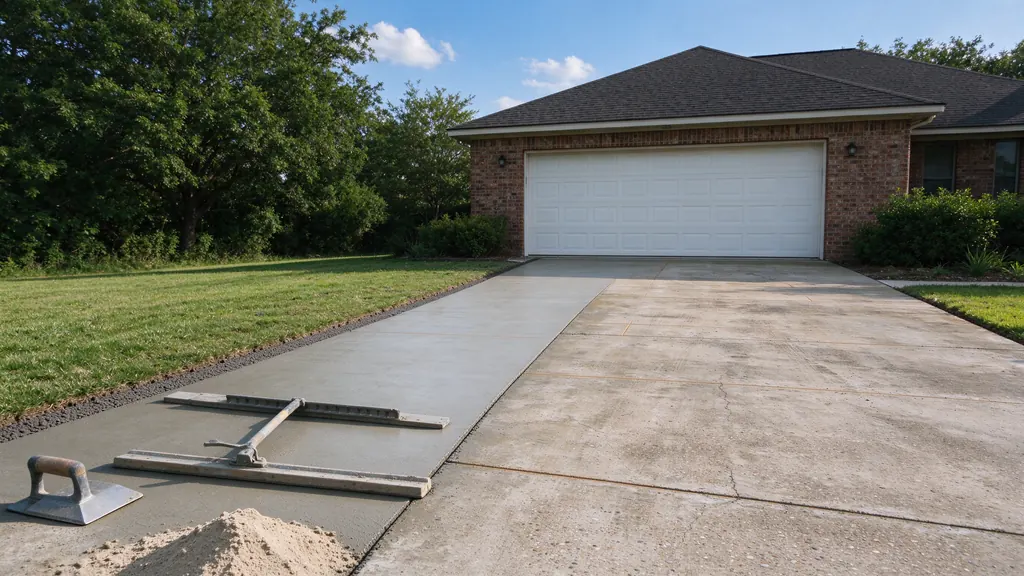
What an extension project involves
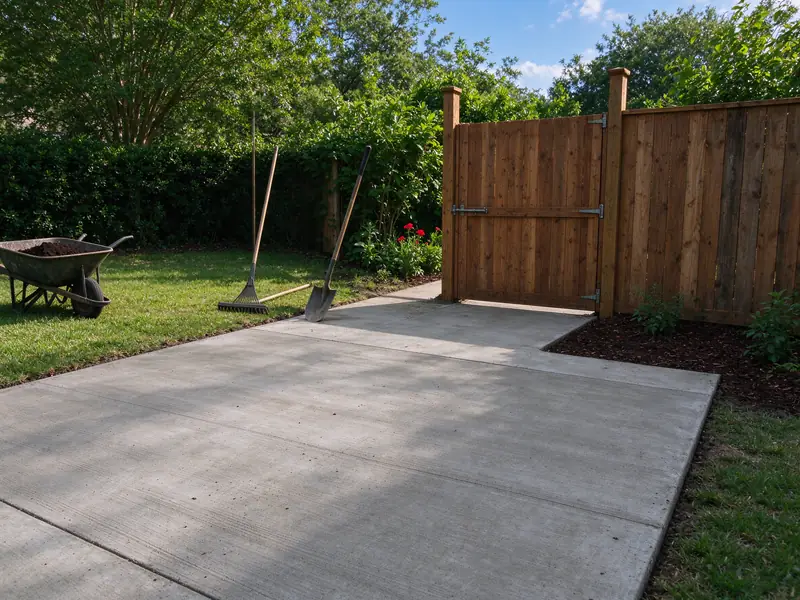
At Surefoot Houston Driveway Repair, we offer and manage extensions to existing driveways: widening a single drive to fit two cars, adding a side parking pad, extending the drive toward a backyard gate or adding a pad for a recreational vehicle or boat. The work is new pavement built against old, so it shares concerns with both a replacement and a repair.
The process is similar to building any driveway section: excavating to the right depth, preparing and compacting a base, forming the edges, and placing concrete or asphalt. The differences are in the joint with the existing driveway, the matching of levels and appearance, and the rules that apply when a property adds paved area. If the existing driveway itself is failing, it often makes sense to plan replacement and the extension together.
Permits and review in the City of Houston
The City of Houston's Residential Driveway, Sidewalk, or Curb and Gutter Permit lists extending a driveway among the work it covers, with plan review and inspections before and after concrete placement. If the extension also widens the entrance at the street, that part is reviewed as a curb cut.
Adding pavement can bring drainage and floodplain review as well. The city's Floodplain Management Office issues a single-family residential driveway permit for vehicle-access flatwork, and its site plan must show whether the new paving matches existing grade, with a mitigation plan when it does not. The city's stormwater rules in its Infrastructure Design Manual also address impervious cover. Suburban cities and the counties have their own processes, covered in our permit guide.
Join the new section to the old driveway
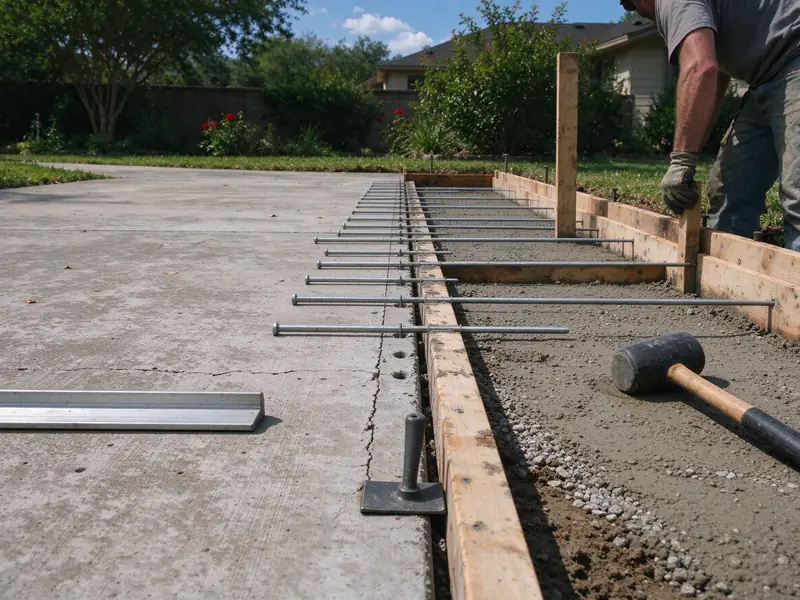
The joint between old and new pavement is where extensions most often go wrong. On concrete, the new slab is usually tied to the existing one with steel dowels set into drilled holes, or separated with an isolation joint, depending on whether the two slabs should move together. The layout of control joints in the extension should line up with the existing pattern so cracks do not run across from the old slab into the new one.
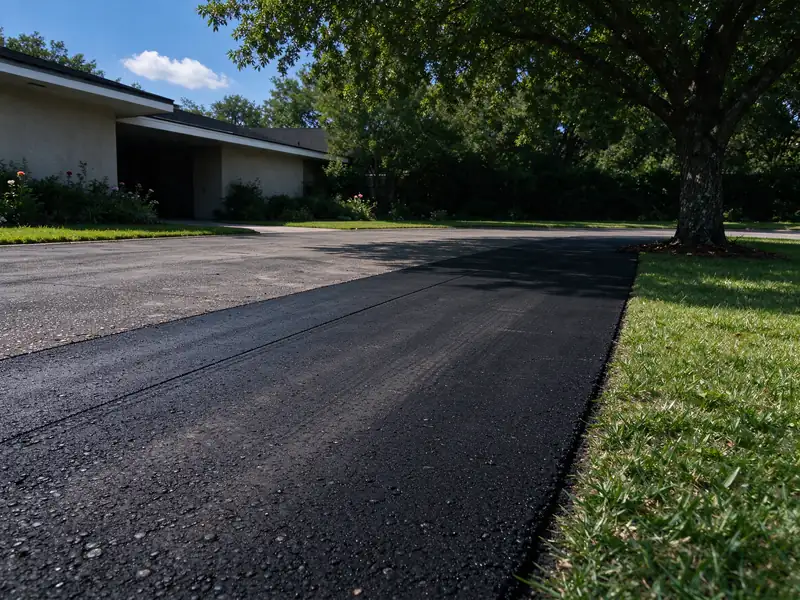
On asphalt, the edge of the existing pavement is cut back to sound material so the new asphalt bonds to a clean vertical face and is compacted tight against it. In both materials the base under the new section must be at least as solid as under the old, or the extension settles and leaves a step along the joint. The base failure guide explains why support matters more than the surface.
Match levels, slope and drainage
The extension has to meet the existing driveway flush and continue its fall away from the house and garage. A widened area that sits slightly lower becomes a channel or puddle, and one that sits higher sheds water onto the old slab or into the garage. We set grades from the fixed points first, then shape the new area so it drains.
Every new square foot of pavement adds runoff, and Houston's clay soils, described by Harris County Flood Control as slow-draining clay on flat terrain, absorb little of it. The extension should send water toward the street or another outlet, not toward a neighbor's lot or the foundation. Where the site needs it, our driveway drainage service can add a drain or regrade the adjoining area.
Let's plan your extension
Tell us what you want to park, where the new pavement would go and whether the entrance needs to widen.
Request an extension assessmentThe color and texture question
New concrete will not match a slab that has weathered for years. The difference fades over time but rarely disappears, and different cement and aggregate sources make an exact match unlikely. Asphalt extensions start darker and weather toward the older surface. If appearance matters, options include a deliberate border or band that separates old and new, or resurfacing the entire driveway after the extension. Our color matching guide explains the limits.
RV, boat and trailer pads
A pad for an RV, boat or trailer carries heavier, concentrated loads than a car, especially under tires and trailer jacks. The pad needs a base and pavement section sized for that weight, and the approach must allow the vehicle to turn onto it without driving over unpaved edges or crushing the joint with the driveway. Measuring the vehicle's length, width and turning path comes before setting the pad's size and location.
Subdivision deed restrictions or homeowner association rules can limit where trailers, boats and RVs may be parked. Those private rules apply separately from any city permit. Check the restrictions for your subdivision before planning a pad; we design the pad and its location, but the owner confirms that the deed restrictions allow it.
Yard parking and wider driveways
Some Houston neighborhoods have adopted the city's Prohibited Yard Parking ordinance, which bars parking on unimproved surfaces in front and side yards within the approved areas. Households with more vehicles than driveway space often look at an extension to move cars off the lawn. A permitted, properly built extension is the durable way to do that; gravel strips and loose pavers laid over grass tend to rut and spread. If you prefer gravel, our gravel driveway service explains how a stable aggregate surface is built.
What changes the price of an extension
Extension pricing depends on the area and thickness of new pavement, excavation and disposal of soil, base depth, forming, doweling or edge cutting at the joint, and the material. Permits and plans, any change at the curb, drainage additions, removal of trees or landscaping, and access for equipment add to it. A heavy RV or boat pad needs a stronger section than a car pad. Use the Houston cost guide and our quote comparison guide to check that each proposal includes the joint detail, base and permit work.
What this work looks like
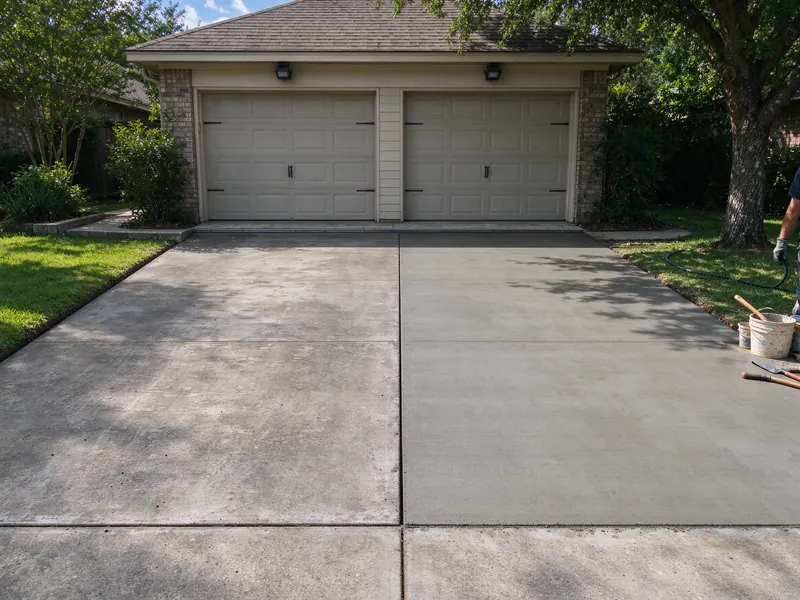
Questions about driveway extensions
Do I need a permit to widen my driveway in Houston?
Inside the City of Houston, the residential driveway permit lists extending a driveway among the covered work, and new flatwork can also need floodplain review. Widening the entrance at the street adds right-of-way review. Suburban cities and unincorporated areas have their own processes, so the address decides which apply.
How is a concrete extension attached to the existing driveway?
Usually with steel dowels drilled into the edge of the existing slab, or with an isolation joint where the two slabs should move independently. Control joints in the new section are aligned with the existing pattern. The base under the extension must be compacted to match so the joint does not step.
Will a driveway extension match my existing concrete?
Not exactly at first. Weathering, cement and aggregate differences make the new section look lighter, and the difference softens over time. A border band or resurfacing the whole driveway afterward are options when appearance is a priority.
How thick should an RV or boat pad be?
It depends on the vehicle's weight, the tire and jack loads and the soil and base beneath. An RV pad generally needs a stronger section than a car driveway. We size the pad after confirming the vehicle and site rather than applying one thickness to every pad.
Can I park my RV on a driveway pad if my subdivision has deed restrictions?
That depends on the restrictions. Many subdivisions limit where RVs, boats and trailers may be parked, and those private rules apply separately from any city permit. Check your deed restrictions or homeowner association rules before building the pad.
Related planning guides
Get an extension scope you can compare
Share the address, the vehicles you want to park and a sketch of the area. We will help define the work and the permits involved.
Get an Estimate